
Short answer
When choosing an automatic barrier, first measure the width of the road to get the arm length, then calculate how many vehicles will pass per day to determine the motor class. The control method (remote control, card, license plate recognition) is chosen according to who will be entering. Photocell and the option to open manually in a power outage must be present in every installation.
Road width determines the arm length
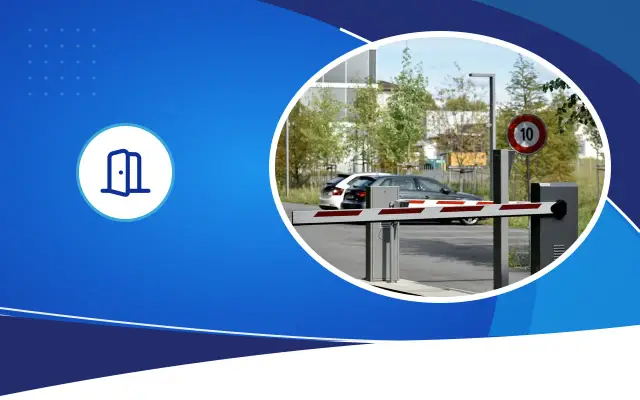
The barrier arm must span the whole lane it will close. If you choose the arm too short, vehicles scrape past the side; if too long, the end of the arm hits the opposite wall or post. Take the measurement not from curb to curb, but from the point where the housing will sit to the point where the arm needs to end.
As the arm gets longer, its weight and wind load increase. For long arms, the manufacturer usually recommends a stronger motor, a leg that supports the end of the arm (end support), or a folding arm. If there is a chance of pedestrians passing under the arm, a skirt (fence) accessory hanging below the arm can also be considered, but the skirt enlarges the surface facing the wind and strains the motor.
Ceiling height at indoor parking entrances is a separate problem. If the arm will touch the ceiling as it rises, an articulated (elbow) arm is used; the arm folds in the middle as it opens and fits under a low ceiling.
Traffic density determines the motor class
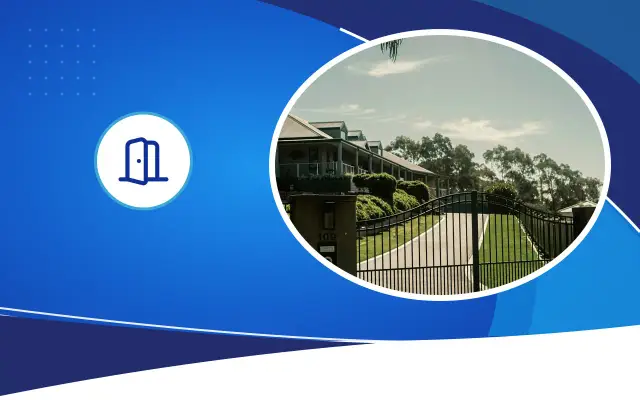
A villa estate has a few dozen passes a day. In a shopping mall parking lot or at a factory entrance, vehicles arrive one after another at shift times. The same barrier would not be right for these two places.
Manufacturers classify their barriers by continuous operating capacity and opening time. For busy entrances, models that open fast, can run back to back without the motor overheating and are suited to continuous use (usually brushless DC or industrial type) are chosen. For rarely used entrances, standard models are enough. When requesting a quote, ask the seller in writing for the model’s daily pass capacity and opening time; these values are in the catalog.
A fast-opening barrier carries more mechanical load when used with a long arm. That is why speed and arm length are assessed together.
Control method: who will enter and how?
How the barrier will be opened depends on who is at the entrance. Where only estate residents enter, a remote control or card may be enough. If visitor traffic is heavy, an open button from the guard booth and a video intercom are needed.
In most estates, several methods are used together: residents pass with a tag or plate recognition, and an attendant presses the button for visitors and delivery vehicles. When choosing the control method, do not forget the exit side. At the exit, the arm rising by itself when a vehicle is detected is often enough, with no need for a separate reader. If entry and exit share the same lane, adding a traffic light or a mirror helps prevent vehicles from both directions arriving in front of the arm at the same time.
- Remote control: cheap and simple, but a lost remote must be deleted from the system; otherwise a former resident can still get in.
- Card reader (RFID): card cancellation is easy and passage records can be kept. The driver has to roll down the window and present the card.
- Long-range tag (UHF): the tag stuck on the windshield is read from several meters away, and the driver passes without stopping.
- License plate recognition camera: no need to hand out cards or remotes, and registered plates pass automatically. Lighting, plate dirt and camera angle must be set correctly.
- Opening by phone: practical for visitors and couriers, but depends on an internet connection.
- 1Measure the road width
- 2Estimate the daily number of passes
- 3Determine the motor class
- 4Choose the control method
- 5Add the photocell and loop
- 6Plan the manual release solution
Safety hardware is not up for negotiation
A barrier arm can come down on the roof of a car or on a pedestrian's head. The hardware that prevents this is the photocell: it watches the area under the arm with an infrared beam, and if the beam is broken the arm will not come down, or it lifts back up. The ground loop (loop detector), which senses a vehicle passing, stops the arm from coming down before the vehicle has fully passed and keeps it from catching the next vehicle from behind.
Power cuts must also be considered. Battery-backed models keep working for a while during an outage. If there is no battery, there should be a lock-and-key system so the arm can be raised by hand, and the key should be kept with the security guard.
Expert note: Use the photocell and the ground loop together. The photocell sees an obstacle under the arm; the loop detects that a vehicle is present. One does not replace the other.
What to watch for in Şanlıurfa conditions
In summer the housing stays in direct sun. The enclosure holding the control board and the battery heats up. That is why the housing color, ventilation and the operating temperature range stated by the manufacturer matter. If possible, place the housing in the shade of the guard booth.
Dust does not affect the ground loop, but it dirties the photocell lenses. At farms on the Harran Plain and at housing estates near construction sites, lens cleaning should be a regular item on the maintenance list. In windy, open areas, if the arm is long, choose an arm without a skirt.
Common mistakes in installation and infrastructure
The barrier housing is fixed to a concrete base with dowels or anchors. If the base is weak, the housing wobbles a little every time the arm opens and closes, the bolts loosen over time and the arm loses its balance. If you are pouring a new base, wait for the concrete to set; a rushed installation starts making noise within the first months.
A conduit (spiral or PVC) should be run underground for the cables. If the power cable runs in the same conduit as the card reader, intercom and loop cables, the signal cables can pick up interference. Separate conduits both reduce faults and make it easier to add more devices later.
The ground loop is placed by cutting into the asphalt or concrete. Because it is hard to move the loop later, where the vehicle will stop, where the reader will be and where the arm will come down should be drawn up together before installation. The reader should be at a height and distance a driver can reach by extending an arm; otherwise every driver has to open the door and get out.
What to ask before buying
The price of a barrier varies with arm length, motor class, control method, accessories and cabling distance. The same model needs different labor depending on whether the cable route is easy or hard. That is why an exact figure requires an on-site inspection and a written quote.
When comparing quotes, do not look only at the total. Are the photocell, ground loop, manual-release lock and battery included in the quote? Does it state the number of cards or remote controls? Who will supply spare parts and service? These questions reduce surprises after installation.
Desa Bilişim designs and installs barriers for housing estate and business entrances in Şanlıurfa. We can see the size of your entrance and its traffic volume on site and recommend a suitable model.
Frequently asked
What happens to the barrier when the power goes out?
Battery-equipped models keep working for a while during an outage. If there is no battery, the arm is lifted by hand by unlocking the housing. Make sure this key is kept by the security guard or the manager.
For a housing estate entrance, which is more suitable: a card or plate recognition?
A card is cheap and simple but requires tracking of distribution and cancellation. Plate recognition removes the need to hand out cards, and residents drive through without stopping. Visitor traffic and budget are the real factors that decide the choice.
Can the barrier arm hit a vehicle?
If the photocell and the ground loop are installed correctly, the arm does not come down while a vehicle is underneath. Most collision cases are seen in installations where this hardware is missing, dirty or out of adjustment. That is why regular maintenance is necessary.
Let's choose the right barrier for your entrance together
Share your road width and traffic volume, and we will inspect on site and prepare a written quote.