Short answer
Most automatic gate accidents come from the gate not detecting the person or vehicle in front of it, and from pinch points. The photocell, the motor's obstacle detection setting, the safety edge, and the warning light should be installed together; the hardware must be tested to confirm it works during regular maintenance. A single photocell does not cover every risk.
How do accidents happen with automatic gates?
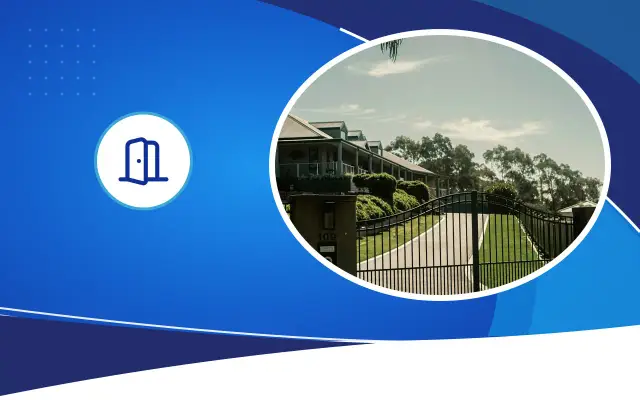
An automatic gate is a heavy steel mass, and the motor pushes it with a certain force. When a child, a bicycle, or a pet gets in front of the gate, the gate cannot know it by itself. Accidents usually happen in three places: the leading edge the gate hits as it closes, the gap between a sliding gate and the wall or post, and the gap on the hinge side of a swing gate.
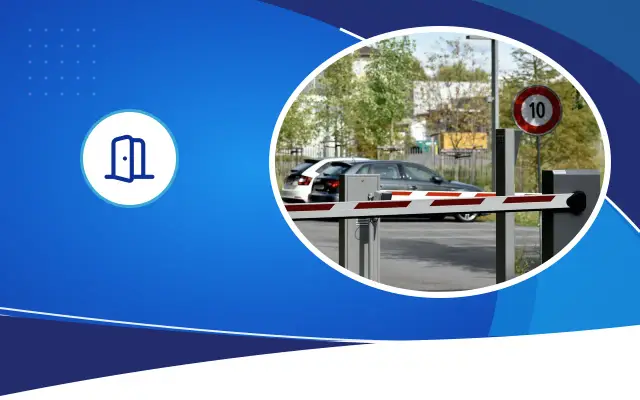
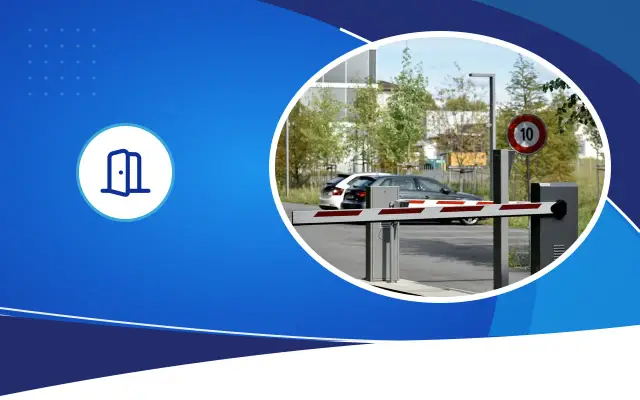
The risk is different with barriers. The arm can come down on a vehicle or a pedestrian passing underneath. In particular, a second vehicle following closely behind another, or a motorcycle trying to pass under the arm, is put in danger.
All of these risks are known, and all of them have a known solution. The problem is that some of these solutions are left out of the quote to cut costs, or are left unmaintained after installation.
How does a photocell work, and where is it installed?
A photocell consists of a transmitter and a receiver. The transmitter sends an infrared beam and the receiver sees it. When an obstacle cuts the beam, the control board stops the gate or reopens it. In some models the transmitter and receiver are on the same side, and only a reflector is placed opposite.
The height of the photocell matters. A single pair of photocells is usually placed at vehicle bumper height. This height sees a vehicle but may not see a child bending to the ground or a low object. At entrances with foot traffic, a second pair of photocells is added at a different height.
A photocell can be placed on both the inside and the outside of the gate. On sliding gates, an extra photocell watching the gap in the direction the gate opens prevents a person left behind from being trapped as the gate opens.
Expert note: Test it by blocking the photocell beam with your hand. Block the beam while the gate is closing; the gate should stop or reopen. If it does not stop, stop using the gate, put the gate in the manually open position, and call the service.
Where a photocell is not enough
A photocell watches a line. It does not see the whole movement area of the gate. That is why extra measures are needed.
- Obstacle detection: the motor notices the rising current when the gate presses against something and stops or reverses. Its sensitivity is set during installation and should not be left too high.
- Safety edge: a pressure-sensitive rubber strip fitted to the closing edge of the gate. It stops the gate the moment it touches something.
- Warning light: it flashes while the gate is moving and warns people approaching.
- Ground loop: on barriers, it prevents the arm from coming down while a vehicle is under it.
- Closing pinch gaps: the opening between a sliding gate and the post and wall is closed with a grille or wire mesh.
- Speed and slow-down setting: the gate slows down in the last part of closing, and the impact force is reduced.
- Gate stops when the photocell beam is blocked
- Second photocell at a different height is present
- Obstacle detection setting tested
- Safety edge is sound
- Warning light works
- Pinch gaps are closed
- Manual release key is in place
- Maintenance form is signed and kept
Extra points to watch on barriers
The most common accident with an arm barrier is two vehicles passing one after the other. The first vehicle presents its card, the second tries to enter following closely behind, and the arm comes down on the second vehicle. The ground loop prevents the arm from coming down as long as there is a vehicle under it, but the position and sensitivity of the loop must be set correctly. If the loop is a few steps behind rather than directly under the arm, the arm can start to come down in the gap between the two vehicles.
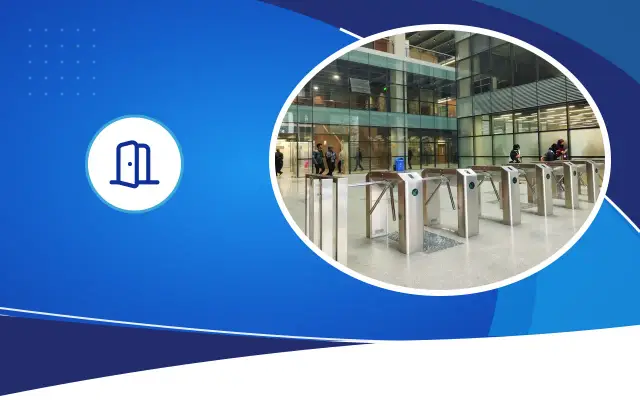
Motorcycles and bicycles are not always detected by the loop because they have little metal mass. At entrances where these vehicles pass often, the photocell and the loop must be used together. To keep pedestrians from walking through the barrier lane, installing a separate pedestrian gate or turnstile also ends the habit of walking under the arm.
A flexible tip on the end of the arm, or a breakaway connection part that snaps on impact, reduces damage in a collision. LED or reflective tapes on the arm make the arm easier to notice at night.
Standards and responsibility
There are TS EN standards applied in Europe and in Türkiye for the safe use of motorized gates; force limits, measurement methods, and the required level of protection are defined in these standards. Which standard and which protection level apply varies with the type of gate, its users, and its location. Ask the company that did the installation for the applied standards and the tests it carried out, in writing.
In housing estates and apartment buildings, the safety of the gate in the shared area is the responsibility of management. When an accident happens, the maintenance records, the installation documents, and whether the gate was in working condition on that date are asked about. For the legal side of this issue, it is right to consult a legal advisor; on the technical side, the job to do is documented installation and regular maintenance.
What should be checked during maintenance?
The safety hardware of an automatic gate wears out over time. The photocell lens gets dusty, the alignment between receiver and transmitter shifts with a knock, and the edge profile hardens and cracks in the sun. The motor's obstacle detection setting can also start working incorrectly over time as the mechanical condition of the gate changes.
In Şanlıurfa, summer heat and dust speed up this wear. Rubber edge profiles age faster in the sun, and dust forms a thin layer on photocell lenses. When setting the maintenance interval, how often the gate is used and how much sun and dust it gets must be taken into account.
In maintenance, it is not enough to check that the motor runs. Each safety part is tried one by one and the result is written on the maintenance form. The housing estate manager should keep a copy of these forms.
What should users be told?
However good the hardware is, the user's behavior affects the risk. Residents should be reminded not to walk under or beside the gate while it is moving, not to let children play near the gate, and to keep remote controls out of children's reach. Hanging a sign with these warnings next to the gate is a simple and effective measure.
There should be a way for residents to report to management if the gate makes strange noises, has slowed down, or does not stop even though the photocell beam is blocked. The longer a fault report is delayed, the more likely a small adjustment problem is to turn into an accident.
Desa Bilişim tests and maintains the safety hardware on the automatic gates and barriers it has installed and taken over. We can check the safety condition of your existing gate on site.
Frequently asked
Why did the gate close despite the photocell?
The photocell lens may be dirty, the alignment of the receiver and transmitter may have shifted, or there may be a fault in the photocell cable. In some cases the obstacle is below or above the height of the beam. Stop using the gate and call a technician.
Is a photocell mandatory on every gate?
The level of protection to be applied is set in the standards according to the type of gate and who uses it. On an automatic gate in a shared area with foot traffic, an installation without a photocell is a serious risk. Ask the installer for the applied standard in writing.
How often should an automatic gate's safety be checked?
It depends on how heavily it is used, the climate, and the manufacturer's recommendation. Housing estate gates should be checked more often than home gates. Management can also run the simple test of blocking the photocell by hand on a regular basis.
Let's check your gate's safety hardware
We test the photocell, obstacle detection, and edge profile on site and report any shortcomings in writing.