Short answer
A bollard (road blocker) is a cylindrical vehicle barrier that rises from and lowers into the ground. Unlike a boom barrier, it is designed to physically stop a vehicle; it is used at public buildings, squares, pedestrian zones and facility entrances that need high security. There are fixed, manually lowered, hydraulic and electromechanical types.
How does a bollard differ from a boom barrier?
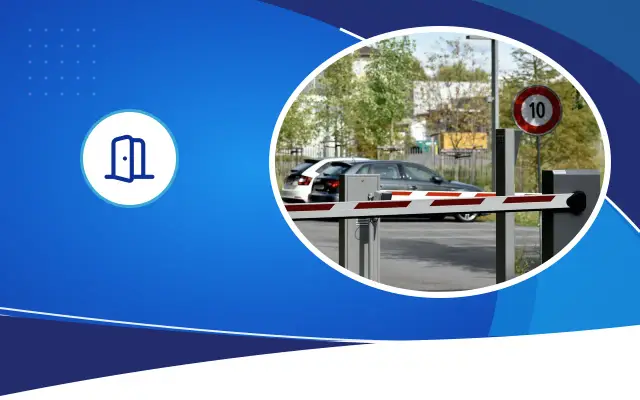
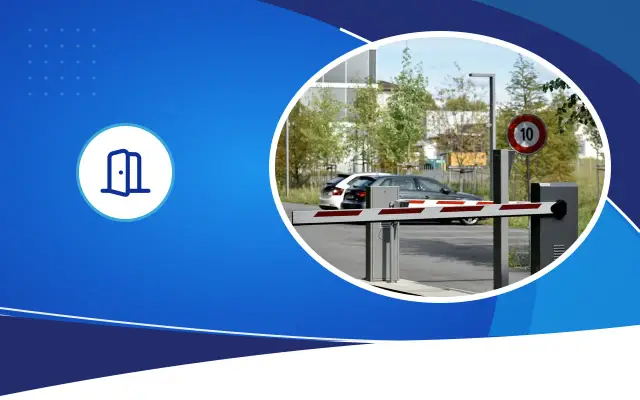
A boom barrier is a traffic regulator. It tells the driver to stop here, but a determined driver can break the arm and drive through. A bollard, on the other hand, is a steel cylinder that sits on a deep foundation in the ground. In the raised position, it physically prevents a vehicle from passing.
That is why a bollard is used for two different purposes. The first is traffic management: letting only service vehicles into a pedestrian street at certain hours, and keeping the road closed at other times. The second is security: preventing a vehicle from approaching quickly in front of a public building, an embassy or a critical facility.
Bollard types
Which type is suitable depends on how often the barrier will go up and down and how strong an obstacle it needs to be.
A service entrance that opens a few times a day and a parking lot entrance that opens dozens of times an hour do not need the same mechanism. In a barrier that moves often, wear on the motor and seals speeds up, so the usage class stated by the manufacturer is checked. Checking for oil leaks and seals in hydraulic models, and checking the gears and motor in electromechanical models, is part of maintenance. Diameter and height also affect the choice: a thick, tall body is both more visible and more durable, but it needs deeper excavation.
- Fixed bollard: buried in the ground, does not move. Permanently separates the pedestrian area from vehicles.
- Removable or manually lowered bollard: unlocked with a key and taken out, or lowered into the ground. Suitable for passages that will rarely be opened.
- Semi-automatic bollard: lowered by hand, and when the lock is released it rises by itself with a spring or gas piston.
- Hydraulic automatic bollard: lowers and rises with the hydraulic unit inside it. Common in heavy use.
- Electromechanical automatic bollard: works with an electric motor and gear system, and needs no hydraulic oil.
Where is it used?
Municipal squares and pedestrianized bazaar streets are the best-known examples. Vehicle entry is closed during the day, and in the early morning hours the barrier lowers for vehicles bringing goods to the shopkeepers. In this kind of use, the barrier is opened with a card, a remote control or license plate recognition and is programmed for set time ranges.
Hospital emergency entrances, courthouses, governorate and police buildings, energy facilities and some factory sites also use bollards. In these places the aim is not so much traffic order as putting up a physical barrier against an attack that could be carried out with a vehicle.
Bollards are seen less often in private housing estates, because they cost more and take more installation work than a boom barrier. Even so, they can be preferred in villa estates where a boom barrier is not wanted for aesthetic reasons, or to protect shared areas used mainly by pedestrians.
In front of schools and park entrances are also places worth considering. Fixed bollards placed at the curb where students gather at school dismissal make it harder for a vehicle that has lost control to mount the sidewalk. This kind of use needs no moving mechanism; a fixed bollard is enough and needs no maintenance.
- Required impact resistance
- Daily rise-and-lower frequency
- Ground drainage
- Position during a power outage
- Emergency vehicle passage
- Night visibility
Impact resistance and certificate
Bollards used for security purposes are tested on whether they withstand being hit by a vehicle of a certain weight at a certain speed. Internationally, different standards are used for these tests; IWA 14 and PAS 68 are among the best known. In a project that needs high security, the relevant test certificate is requested from the manufacturer.
Not every bollard is crash-tested. Models made for traffic order may not be enough to stop a vehicle. If the seller says the barrier is strong, ask in writing according to which test, and at what vehicle weight and speed, it was tested.
Expert note: If the project requires impact resistance, state it clearly in the specification. Otherwise two products that look the same but have very different strength end up being compared under the same quote line.
Installation: most of the work is under the ground
An automatic bollard sits inside a housing buried in the ground. An excavation is made for the housing, concrete is poured, and a drainage line is connected under the housing. Without drainage, rainwater collects in the housing and damages the hydraulic or electrical parts. Before excavation, the locations of the water, electricity, natural gas and communication lines running under the ground must be identified.
Control and power cables are carried in conduit between the housing and the control cabinet. The control cabinet is usually placed in the security booth or in a cabinet near the barrier. To keep the barrier from rising while a vehicle is over it, a ground loop or photocell is used; a barrier that rises into a vehicle standing on it causes serious damage.
A raised barrier must also be visible at night. Most models have LED lighting and reflective tape on top. Putting a warning sign and a ground marking in front of the barrier also makes it easier for drivers to notice it.
Emergency and power outage
Fire trucks and ambulances must be able to enter where the barrier is. That is why a method for lowering the barrier quickly in an emergency must be defined in the project from the start: the security guard’s button, a signal from the fire alarm system, or a manual lowering mechanism. Which method is applied varies by the type of facility and the expectations of the local fire department, and should be checked during design.
Which position the barrier stays in when the power goes out is also a decision. Some facilities want the barrier to lower in an outage (staying open to passage), and some want it to stay raised. Battery-backed models can make a certain number of movements during an outage. The position chosen must be communicated in writing to the security staff and in the emergency plan; at the moment of an outage no one should have to guess why the barrier stayed raised.
Factors that affect the price
The cost of a bollard varies greatly with its type, diameter, height, impact resistance, quantity and the difficulty of the groundwork. Excavation in hard rock ground, cutting and re-laying existing asphalt, and the length of the drainage line significantly affect the total. That is why a sound figure cannot be given without a site survey; an on-site inspection and a written quote are needed.
Desa Bilişim carries out barrier and access control projects for institutions and facilities in Şanlıurfa. We can assess together whether a bollard or a boom barrier is suitable for your entrance.
Frequently asked
What is the basic difference between a bollard and a boom barrier?
A boom barrier regulates traffic and can break when forced. A bollard is a steel cylinder, sits on a deep foundation in the ground, and is designed to physically stop a vehicle. That is why it is preferred at entrances where security comes first.
Should I choose hydraulic or electromechanical?
Hydraulic models are common in heavy use and are powerful, but the hydraulic unit needs maintenance. Electromechanical models use no oil. The choice is made by considering usage frequency, climate and service availability together.
Does a bollard collect water when it rains?
If a drainage line is not connected to the buried housing, water collects and damages the mechanism. At installation, a connection from under the housing to the rainwater line or a drainage pit is essential.
Let’s choose the right barrier for your entrance together
Let us inspect your facility’s entrance on site and prepare a written quote for a bollard or boom barrier.