
Short answer
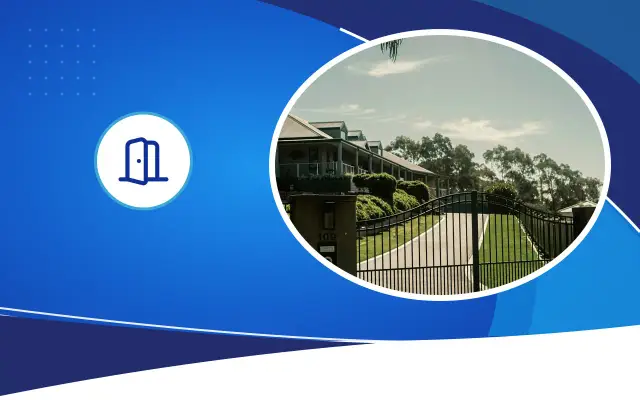
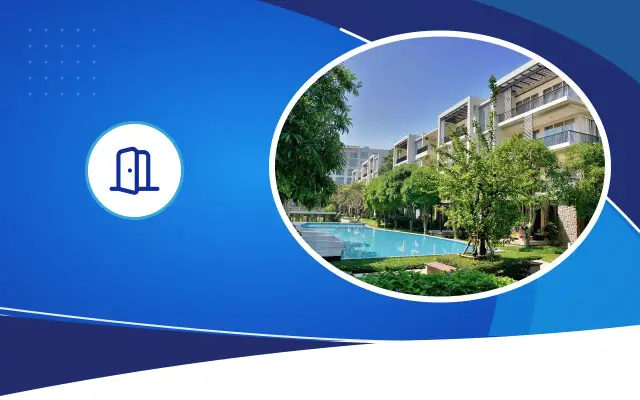
Security at a housing estate entrance starts with planning the vehicle lane and the pedestrian lane separately. For vehicles, a barrier and license plate recognition or a card are installed, for pedestrians turnstile or a card-controlled door, for guests a video intercom; the camera records every pass. If these systems share the same cabling infrastructure and, where possible, the same software, they are easier to manage.
The problem with piece-by-piece installation
At many housing estates, entrance security builds up piece by piece over the years. First a barrier is installed, then cameras are added, and some time later a card lock is fitted on the pedestrian door. Each one comes from a different company at a different time. In the end, the guard booth collects three separate screens, two separate card systems, and remote controls nobody is sure who has.
This mess has a daily cost. When a resident moves out, their vehicle is deleted from the barrier system but their pedestrian card is forgotten. When you look for an incident in the camera recordings, the time in the barrier log does not match the camera's clock. At an entrance planned as a whole from the start, most of these problems do not arise.
A complete plan does not mean buying everything from the same brand. What is really needed is that the devices can be connected to each other, managed from a single user list, and share the same cabling infrastructure. Which of your existing devices can be added to this structure and which need to be replaced becomes clear in an on-site inspection.
Vehicle entrance: barrier and recognition
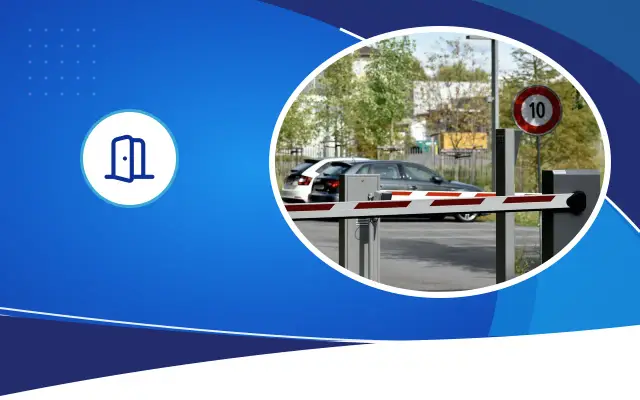
The basic hardware in the vehicle lane is the barrier, photocell and the ground loop. How residents' vehicles will be recognized is chosen according to the size of the estate and the guest traffic. At an estate with few apartments, a remote control may be enough. At large estates, license plate recognition or a long-range tag stuck to the windshield lets residents drive through without stopping.
If the entry and exit are separate lanes, a separate barrier is installed in each lane. If there is two-way traffic in a single lane, a traffic light or a mirror is used so that two vehicles do not arrive in front of the barrier at the same time. A space should be left in front of the barrier where the vehicle whose turn it is can wait without blocking the road; otherwise a queue forms on the main street.
Expert note: Keep the license plate recognition camera separate from the general surveillance camera. The plate camera is installed at a narrow angle and at plate height; trying to both read the plate and watch the whole entrance with the same camera gives weak results for both.
Pedestrian entrance and guests
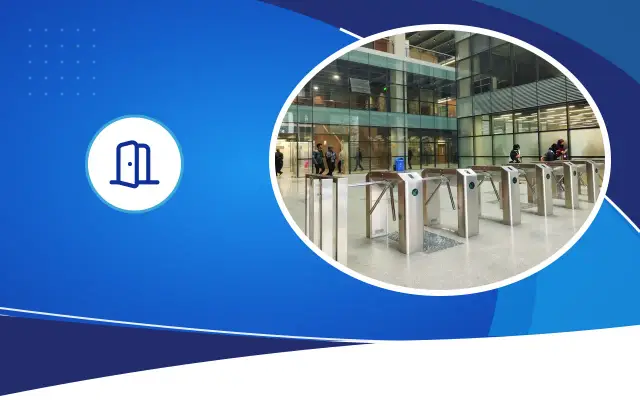
At most housing estates, the pedestrian door is the weakest point. The door is left open, the lock breaks, or card distribution is not tracked. At the pedestrian entrance, a card or face recognition-based lock, a door closer, and a magnetic contact that reports when the door is left open should be installed together. At busy estates, a turnstile can also be considered for pedestrians.
For guests, a video intercom connects the guard booth and the apartments. The guest calls the apartment from the panel at the door, and the resident sees the image and opens the door. For short visits such as cargo and food deliveries, solutions like opening with the guard's approval or a one-time QR code can be used.
Making the guard's job easier is also part of the plan. If the booth is set up so that the barrier, the pedestrian door, and the intercom can be managed from a single desk, the guard sees the camera image while talking to the guest and opens the door from the same place. At night, when no guard is present, it can be set so that a guest call goes directly to the apartment and the barrier opens only for registered vehicles. These scenarios should be discussed with the management before installation and defined in the software.
- 1List the existing devices and cables
- 2Separate the vehicle and pedestrian lanes
- 3Choose the recognition method
- 4Define the camera roles
- 5Plan the shared infrastructure and the UPS
- 6Bring the users together in one software
The role of the cameras
The cameras at the entrance do three different jobs, and each job gets its own camera position. One camera looks at the vehicle lane and records the plate legibly. One camera looks at the pedestrian door and sees the face of the person passing recognizably. One or two cameras record the general view of the entrance, the area around the booth, and the road in front of the estate.
The disk of the recorder (NVR) is chosen according to how many days the recordings will be kept. You can roughly calculate the recording time and the number of cameras with the disk calculator on the /araclar/ page. Common-area cameras are subject to KVKK when they process personal data; a notice sign saying the entrance is monitored by camera should be posted, and who will access the recordings should be decided by the management. If you have a legal question on this, consult a specialist.
Shared infrastructure and a single software
If the barrier, camera, intercom, and access control are at the same entrance, the cable routes should be planned together. If the conduits running from the guard booth to the barrier, the doors, and the camera poles are laid wide enough and with spares from the start, adding devices later becomes easier. On the electrical side, an uninterruptible power supply (UPS) should power at least the recorder, the network switch, and the access control panel.
On the software side, the aim is to use as few systems as possible. Some access control software manages the barrier, the pedestrian door, and the turnstile from a single user list; when you delete a resident, all their permissions are deleted together. Matching the camera recorder with the access events also lets you reach the relevant footage quickly when an incident is searched for.
- Conduit and cable route plan from the booth to all devices
- UPS for the recorder, network switch, and panels
- The same time source on all devices
- A single user list: vehicle, pedestrian, and guest
- Card, tag, and usage information for residents after installation
Order of implementation
First list the current situation: which devices exist, which one works, where do the cables run? Then clarify the needs in the management board: how much guest traffic is there, how many vehicles and how many residents, and how many hours is the guard on duty? With this information, asking for a single project and a single quote is healthier than trying to put together pieces from different companies.
Doing all the work at once at a large housing estate can strain the budget. In that case, the cabling infrastructure and the main software are installed in the first stage, and devices are added in later stages. What matters is that every stage is part of the same plan. Keep the plan and the cable diagram in the management file; even if the board changes, the next stage continues from the same place.
At housing estates in Şanlıurfa, Desa Bilişim installs the barrier, cameras, intercom, and access control as a single project. We can inspect your estate's entrance on site and prepare a phased plan.
Frequently asked
Which is better at a housing estate entrance: license plate recognition or a card?
License plate recognition removes the need to hand out cards, and residents drive through without stopping. A card or tag can be cheaper, but it requires tracking of distribution and cancellation. The size of the estate and the amount of guest traffic decide the choice.
Can a camera and card system be added to an existing barrier?
The control board of most barriers has an external open input; a card reader or license plate recognition can be connected to this input. The condition of the barrier and the cable routes must be inspected on site.
Who can watch the camera recordings at a housing estate entrance?
Who will access the recordings should be decided by the management and kept limited. Recordings count as personal data; get an opinion from a legal advisor about your obligations under KVKK.
Let's set up your estate entrance with a single plan
Let us inspect your existing systems on site and prepare a phased plan and a written quote.