
Short answer
Three things decide how staff entry is planned in a factory: the rush at shift change, the dust and dirt of the work environment, and different groups of people such as permanent staff, subcontractors and visitors. Turnstile and PDKS terminal is chosen according to these needs. A well-installed system gives you the attendance record and, in an emergency, a list of who is still in the facility.
Shift change: the real load comes in a few minutes
In factories, entries and exits are not spread across the day. At shift change one group leaves while another comes in, and shuttle vehicles pull up to the gate at the same time. If staff entry is not planned for this few-minute rush, queues form at the gate, and more workers pass without scanning or scan a friend’s card.
The number of turnstiles is calculated from how many people must pass in how many minutes at the busiest shift change. If the entry and exit directions are split into separate lanes, the two groups do not wait for each other. If the shuttle drop-off point is placed a short walk from the turnstile rather than right in front of it, crowding decreases.
In the gate layout, it is also important that the guard booth has a direct view of the turnstiles. The guard should see people who jump over without scanning, or two people trying to pass at the same time.
Card, face recognition or fingerprint?
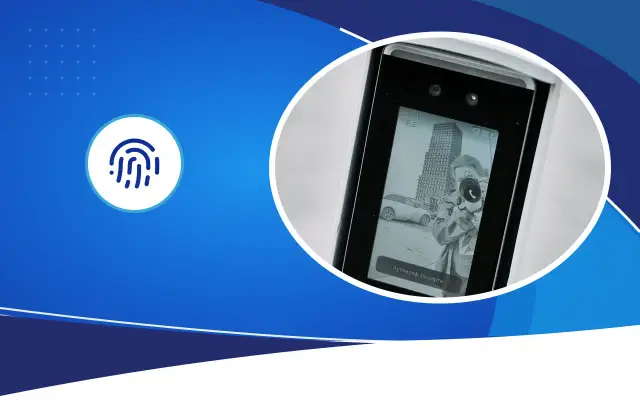
The factory environment directly affects the choice of reader. Fingerprint readers often fail on hands that are dusty, oily or exposed to chemicals; where gloves are used, fingerprints are not practical. Face recognition terminals are contactless and remove the problem of forgotten cards, but how well they read with a hard hat, mask and glasses varies by model.
The card is the simplest solution. It is fast, can be scanned with gloves on, and is cancelled if lost. Its weak side is that it is open to use by someone else. This risk is reduced by matching the image taken at the card scan with a camera at the turnstile, or by using card and face verification together in critical areas.
Biometric data is special category personal data. If fingerprint or face recognition will be used, you need to offer employees an alternative method and get a legal review of KVKK compliance.
Expert note: Before choosing a reader, put one terminal at the gate for a week as a trial. Seeing how many scans fail at the end of a shift with dusty hands, a hard hat and work gloves gives more accurate information than the catalog.
Separating permanent staff, subcontractors and visitors
Not everyone who enters a factory has the same authority. A permanent employee’s card opens their own department and the common areas. Subcontractor workers’ cards are limited to the contract period and become invalid automatically when it ends. Suppliers and visitors enter with a daily card, only as far as the department they are going to.
For this separation, person groups and time schedules are defined in the system. Having an expiry date on cards keeps the cards of people who leave or whose contracts end from staying active. Even if human resources forget to cancel a card, it will not work once it expires.
It is also possible to block access to the production area for an employee who has not completed occupational safety training or whose health report has expired. Once this information is entered in the system, that person’s card does not open in that zone.
Keeping visitor and supplier records digitally is far more useful than a paper logbook. Who came from which company, when, and whom they visited is recorded, and if a visitor has not signed out, the security guard can see this from the list at the end of the day.
- Rush at shift change
- Dust, oil and gloves
- Permanent staff, subcontractor, visitor
- Critical zone doors
- List of people inside in an emergency
- Transfer to payroll
Zones: production, warehouse, laboratory, power room
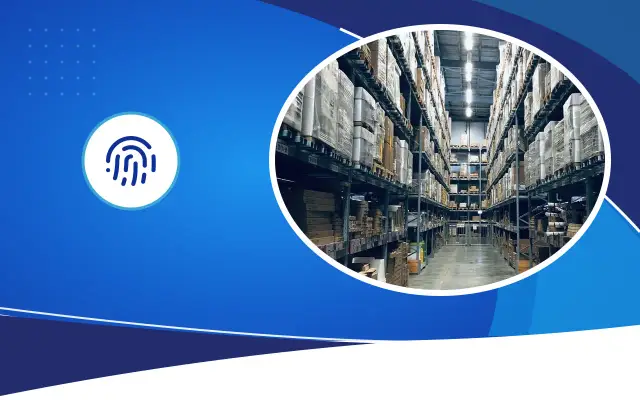
The turnstile at the main entrance records who enters the facility. Critical doors inside the facility are managed as separate zones. The raw material and finished goods warehouse, quality laboratory, transformer and power room, compressor room, server room and management floor are at the top of these zones.
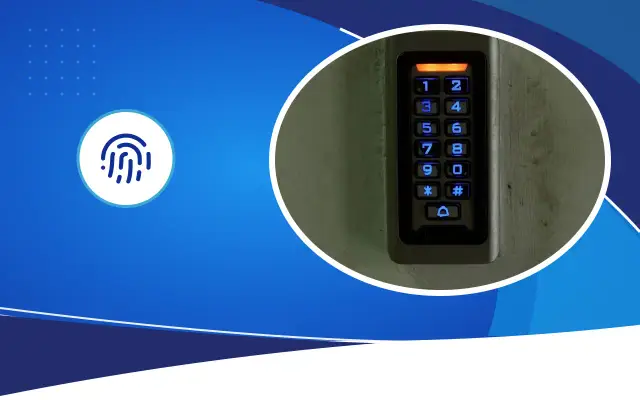
These doors use card readers and electric locks. Every pass is recorded by person and time. After a warehouse discrepancy or a fault, you can check the report to see who opened the door at that time. When used together with a door camera, the record is verified with video.
For fire and emergencies, the locks of these doors are connected to the fire alarm system and set to release on alarm. How each door behaves is determined by the facility’s fire project. Zone permissions should be reviewed with human resources at least once a year, and the old permissions of employees who change roles should be removed.
Who is inside in an emergency?
When there is a fire, chemical leak or earthquake in a factory, the first question is who is still inside. A system that records entries and exits through turnstiles can give a list of the people in the facility at that moment. This list is used for roll call at the assembly point.
A few conditions are needed for the list to be accurate:
- Everyone scanning their card on entry and exit
- A turnstile or reader on the exit side too
- Visitor and subcontractor entries also recorded in the system
- The list being retrievable during a power outage
- The list being reachable by phone or tablet at the assembly point
- This roll call actually being tested in drills
PDKS report and transfer to payroll
When turnstile records are transferred to PDKS (time and attendance system) software, each employee’s entry and exit times, late arrivals, early departures and overtime are reported. If the shift schedule is defined in the system, the software knows which employee is on which shift and correctly calculates a night shift’s exit that runs into the next day.
If the report can be transferred to the payroll program, the manual work done by human resources is reduced. Whether this is possible depends on the payroll software you use. When choosing a PDKS, be sure to ask whether it can exchange data with your current payroll program.
A reader can also be placed at the canteen entrance to track the number of meals. This makes settling accounts with the catering company easier.
For reports to be reliable, the system clock must be correct and terminals must keep records during a network outage. A terminal should be able to store records in its own memory during an outage and send them to the software when the connection returns. Otherwise a one-day outage leaves that day’s attendance report empty.
Installation and outdoor conditions
Factory entrances are often outdoors. Turnstiles and terminals should be under a covered canopy and chosen with a protection rating suitable for outdoors. In the organized industrial zone in Şanlıurfa, summer heat and dust put strain on terminal screens and card readers.
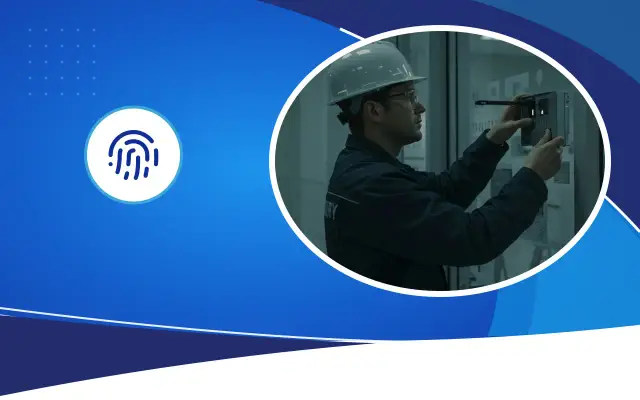
Turnstile cables should run through conduit in the floor and be protected from forklift and vehicle traffic. Desa Bilişim installs turnstiles, PDKS, card-controlled doors and camera systems for factories together in a single project; we can see your shift schedule and prepare an entry plan.
Frequently asked
How do we prevent someone from passing with another person’s card?
A camera placed at each turnstile matches the image taken at the moment of the card scan with the access record; in suspicious cases the record is checked. Requiring both card and face verification in critical areas reduces this risk even further.
Do subcontractor workers need cards too?
Yes. Subcontractor workers’ entries and exits should also be recorded; this information is needed for both occupational safety and emergency roll calls. Limiting cards to the contract period prevents them from staying active after the job is done.
Does a face recognition terminal work with a mask and a hard hat?
Some models can read with a mask and a hard hat, but success varies with the model, the lighting and the camera angle. We recommend running a trial in your own working environment before choosing.
An entry plan that fits your shift schedule
Let us see your factory entrance at shift time, and we will prepare a written quote for turnstiles and PDKS.