
Short answer
A card access system is an electronic control system that determines who can open a door and at what hours. The reader recognizes the person by card, PIN, fingerprint, or face, the control panel checks the authorization, and the electric lock is opened. Every passage is recorded. For biometric methods, KVKK obligations should also be assessed separately.
What parts does the system consist of?
An access control system consists of four parts. The reader is next to the door and recognizes the person. The control panel receives the information from the reader and checks whether this person is authorized to pass through this door at this time. The lock is opened on the panel's command. The software is where users, permissions, and access records are managed.
In a small office, standalone devices with one door, where the reader and panel are in the same box, may be enough. If there are multiple doors, floors, or buildings, panels connected to central software are used. That way, the access of an employee who leaves the job is removed from all doors with one click.
The difference between standalone devices and a central system becomes clear as the number of doors grows. If there are five separate devices on five doors, you have to enroll a new employee on each device separately, and the records are kept in five separate places. In a central system, you define the user once and choose which doors they can pass through and at what hours. Even if you are installing for a single door today, if you plan to add doors later, choosing an expandable panel reduces the need to invest again afterward.
Card, PIN, fingerprint, face: which one when?
Recognition methods differ in convenience, security, and cost. Most systems support more than one method at the same time; for example, a card may be required at the office entrance, and a card and PIN together at the server room.
- Card (RFID): fast and cheap. If a card is lost, it is canceled. Handing a card to someone else cannot be prevented.
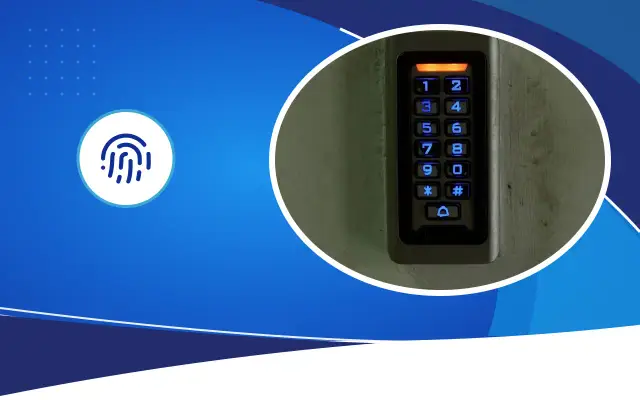
- PIN: no need to hand out cards. A PIN is easily shared, and the keys wear over time and give hints.
- Fingerprint: tied to the person and cannot be shared. Reading can be harder with dirty, injured, or very dry fingers.
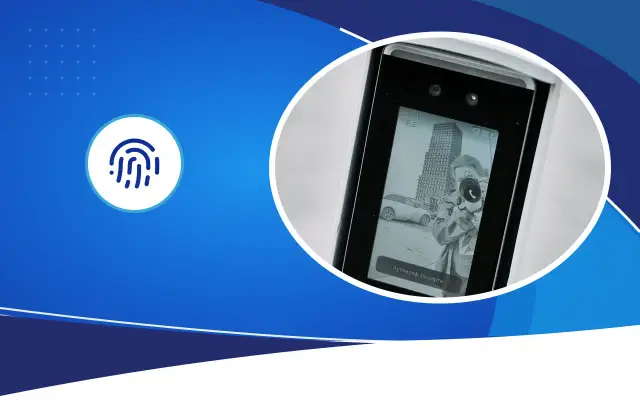
- Face recognition: contactless and fast. Lighting conditions and camera angle must be set correctly.
- Phone (Bluetooth or NFC): removes the need to carry a card. The phone's charge and app compatibility can cause problems.
- QR code: practical for giving guests temporary access.
Card technology makes a difference
Not all cards have the same security. The number inside older low-frequency cards can be easily read and copied. Encrypted high-frequency cards are much more resistant to copying. The cost difference between them is usually small compared with the security hole in the card.
If you are expanding an existing system, check whether the new readers can read the old cards. Replacing everyone's card means both cost and time. For a new installation, choosing encrypted card technology from the start reduces the need for changes later. A photo and name can be printed on the card; this lets the security guard see at a glance whom the card belongs to and combines card use with an ID card.
Expert note: When choosing a card, ask the seller whether the card is encrypted and how it is protected against copying. Giving only frequency information is not an answer to this question.
Lock selection and fire safety
The lock type that holds the door is chosen according to the door's structure and the security need. A magnetic lock is fitted to the door frame, holds the door while there is power, and releases when the power is cut. An electric strike (push-to-open) is fitted to the door's strike plate; there are two types, which stay open or locked when power is cut. Special mounting parts are used on glass doors.
On doors on an escape route, the door must open when the power is cut or a fire alarm comes in. That is why connecting the access control panel to the fire alarm system and placing an emergency exit button next to the door is important. Which door counts as an escape route and how it must behave is assessed under the Regulation on Fire Protection of Buildings and the fire project; it should be checked during project design.
To keep the lock from locking before the door has closed, a door closer (hydraulic arm) and a magnetic contact that reports the door's status are also added. That way, a door left open appears as an alarm in the software and the officer is directed to close it.
Biometric data and KVKK
Fingerprint and face data are counted as special-category personal data in the Personal Data Protection Law No. 6698. Processing this kind of data is subject to stricter conditions. The employer must explain to employees why the biometric method is used, determine where and for how long the data will be kept, and establish the necessary legal basis.
The Personal Data Protection Authority has published various decisions about biometric data, and in these decisions the question of whether the same purpose can be reached with a less intrusive method (for example, a card) stands out. That is why we recommend getting the opinion of a legal advisor before installing a biometric system.
On the technical side, make sure that the devices store a mathematical template of the fingerprint rather than its image, whether the data is kept on the device or on a server, and whether it is encrypted. Giving employees the choice between a card and biometrics is also a commonly used approach.
Software and reporting
The real value of access control is in the software. Who entered which door and when? Why was the archive door opened at night? Which door stayed open for a long time? The answers to these questions are in the access records.
When choosing the software, look at how easy it is to add and remove users, how time schedules (for example, no access on weekends) are defined, and in what format records can be exported. If you will also use the same system for time and attendance control (PDKS) too, discuss data exchange with the payroll program from the start.
Also set how long records are kept. An access record kept forever both takes up unnecessary space and may conflict with the KVKK principle of not keeping data longer than necessary.
What does the cost depend on?
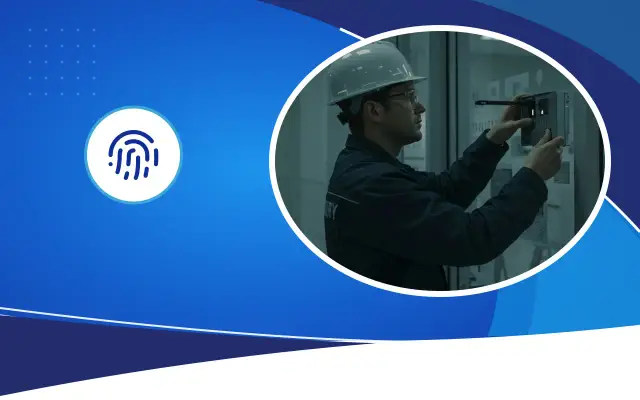
The cost of an access control system varies with the number of doors, the recognition method, the lock type, the structure of the doors, the cabling distance, and the software license. Glass, wooden, and steel doors need different mounting parts. That is why each door should be inspected on site and a written quote prepared.
Desa Bilişim installs access control systems for businesses, schools, and institutions in Şanlıurfa. We can assess your doors and number of users together and recommend the right method.
Frequently asked
What happens to a card access system when the power goes out?
The panel and locks are usually powered by a battery-backed power supply and keep working for a while during an outage. Whether the lock stays open or locked when the battery runs out depends on the lock type. Doors on escape routes should be installed so they open during an outage.
Is employee consent needed to install a fingerprint system?
Biometric data is special-category personal data under KVKK, and its processing is subject to strict conditions. Which legal basis is appropriate varies with the situation of the business. Get the opinion of a legal advisor before installation.
Can access control be added to existing doors?
It can be added to most doors. The door's material, frame, and opening direction determine the suitable lock type. A cable route around the door is needed for cabling, so doors are inspected on site.
Let's choose the right access method for your doors
Share your number of doors and user structure, and we will inspect on site and prepare a written quote.