
Short answer
In a factory or warehouse, the camera plan is made by dividing the site into areas: perimeter fence, entrance and weighbridge, loading dock, shelf aisles and production line. Each area has a different distance, lighting and environmental condition, so one type of camera is not enough. For long perimeter lines, motorized lens and fiber cable, for high-ceiling warehouses the aisle angle, and for dusty production areas a housing with a high protection rating are chosen.
Separate the areas first
What is expected of a camera in a factory is not one thing. Seeing a person jump the fence at night, checking how many boxes leave the loading dock during the day, and understanding how a workplace accident happened on the production line are separate needs. Trying to meet them all with a single camera type gives a system that is either needlessly expensive or inadequate.
Start planning with the site layout plan. On the plan, separate the areas with colors and write a question for each area: whom, what and from what distance do I want to see here? Before the number of cameras, this exercise shows which lens, which night vision and which housing are needed. For the loading dock, for example, you look for an angle that sees inside the truck bed and the forklift on the dock at the same time; this angle shows at which stage goods that arrive missing or damaged in a shipment ran into trouble.
- Perimeter fence and rear facades: intrusion detection.
- Main entrance, weighbridge and guard booth: vehicle plate and driver.
- Loading and unloading dock: box, pallet and forklift movement.
- Warehouse shelf aisles: picking and putting away products.
- Production line: process and occupational safety.
- Parking lot, canteen entrance and administration building.
Wide areas and perimeter security
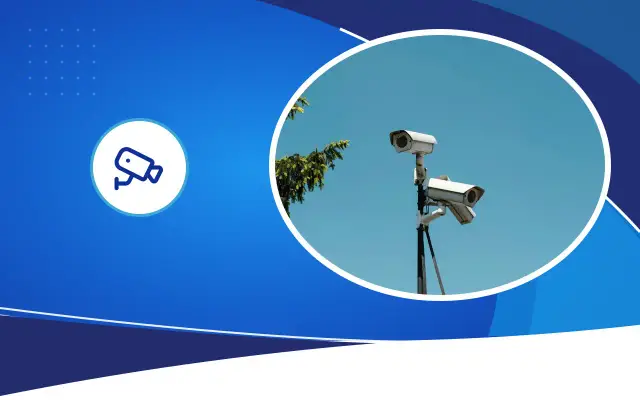
The perimeter fence of a facility in an organized industrial zone can be hundreds of meters long. Covering this line with a few wide-angle cameras may seem possible, but with a wide angle a person in the distance shrinks to a few pixels. Cameras with motorized lenses and sufficient infrared range, looking from one corner of the fence to the other, are the more accurate choice. Arranging the cameras along the fence so that they can see each other lets one cover the blind spot in front of another.
In night perimeter security, the real problem is light. A camera whose infrared range looks long on paper actually gives a clear image at a shorter distance over grass and soil. If there is proper lighting along the fence, color night vision cameras can also be considered.
Many cameras have image analytics features such as line crossing or area entry. These features raise an alarm when a person or vehicle crosses a defined line. A tree swaying in the wind, a cat or a shadow can cause a false alarm; models that classify people and vehicles reduce this problem. Also discuss from the start who will receive the alarm and what they will do at night.
High ceilings and shelf aisles
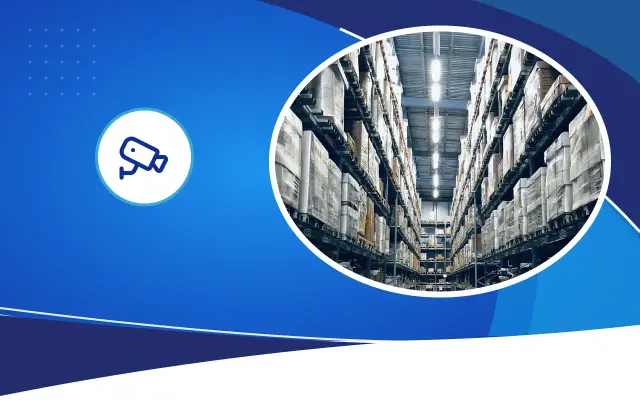
In a warehouse, it is tempting to hang the camera very high, on the roof truss: nobody can reach it and a wide area is visible. The result is often an image that shows the tops of people’s heads and does not let you make out faces or product labels. In a shelf aisle, place the camera at the end of the aisle, near the top level of the shelves but angled downward.
Some cameras offer a corridor mode that rotates the image vertically and shows long, narrow areas more efficiently. In shelf aisles, this mode fills the edges of the screen with the aisle itself instead of blank wall.
High mounting has another cost: maintenance. Wiping the lens of a camera at eight meters needs a scissor lift or a forklift basket. When placing the camera, also plan how the maintenance crew will reach it.
Expert note: Position the warehouse camera when the shelves are full. An angle that looks wide in an empty warehouse can be blocked by pallet loads once the shelves fill.
- Area width and distance
- Ceiling height and shelves
- Dust and moisture protection
- Summer heat and under-roof space
- Long cable and fiber
- Night lighting
Dust, heat and vibration
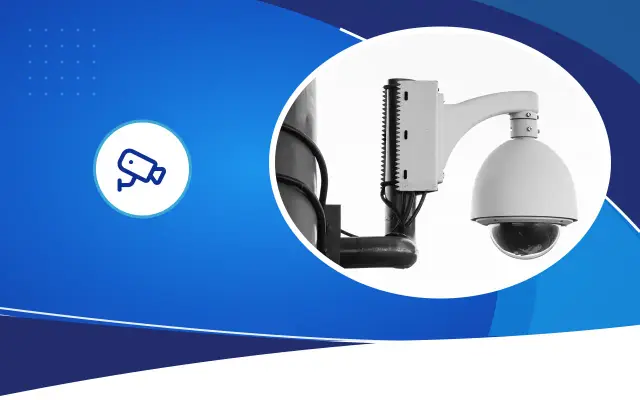
In facilities that process flour, feed, cement or cotton, dust builds up on the camera’s lens and housing. When choosing an outdoor housing, look at the IP protection rating; ratings such as IP66 and IP67 show the housing’s resistance to dust and water. In a dusty environment, the dome glass of a dome camera shows dust more clearly, while a bullet camera with a short sun shield in front of the lens can make cleaning easier in some areas.
In Şanlıurfa in the summer months, the space under a sheet metal roof gets very hot. Placing the camera close to the roof, where hot air collects, pushes the device’s operating temperature limit. Check the technical datasheets of the camera and switchfor their operating temperature range.
Near machines such as presses, crushers or large fans, vibration shakes the image. Attach the camera not to the machine’s support but to a separate column or wall.
Areas with a dust explosion risk are a separate matter. Explosion-protected equipment may be required in these zones. Decide which areas fall under this together with your occupational safety specialist.
Cable, network and recording
In a factory, the distance between the camera and the recording room often exceeds the limit of copper network cable. Fiber cable is run to remote points, and small cabinets with switches are placed in the field. Keeping the cameras on a separate network or VLAN instead of the same network as office computers is healthier for both security and network traffic.
The recorder or recording server should be kept in a cabinet in the server room that is cooled and kept on UPS power. As the number of cameras grows, so does the chance of a disk failure. A redundant disk structure, which keeps the data safe through a single failure across multiple disks, should be considered in facilities where losses are costly.
Employees and personal data
Cameras placed on the production line and in the warehouse also record employees. Set the purpose of this recording, the retention period and who will have access in writing, and inform the employees. Cameras are not placed in places such as changing rooms, showers, toilets and rest areas. See our article on employee monitoring for details; consult a lawyer on anything you are unsure about.
If the purpose of the camera in the production area is occupational safety, show this in the installation too. The camera should see the machine’s danger zone and the employee’s access path in order to understand how an accident happened. An angle that watches an employee’s desk or screen up close cannot be explained by this purpose and creates a trust problem with employees. Keeping the camera angle consistent with its purpose gives a sounder footing both legally and for workplace relations.
Frequently asked
Which camera should be chosen for the factory perimeter?
Along long fence lines, cameras with motorized lenses, sufficient infrared range and an outdoor protection rating are chosen. Cameras are arranged so that they can see in front of each other. Analytics features such as line crossing can be used to raise alarms at night.
At what height should cameras be mounted in a warehouse?
There is no single right height. The higher the camera, the harder it is to make out faces and labels, and the harder maintenance becomes. In shelf aisles, placing the camera at the end of the aisle, angled downward, at a point the maintenance crew can reach usually gives better results.
How often should cameras be cleaned in a dusty environment?
It depends on how dusty the environment is. When blur or night glare starts to appear in the image, lens cleaning is already overdue. In dusty facilities, it is better to put cleaning on a regular schedule rather than leaving it to the annual service.
A camera plan for your facility
Share your site layout plan, and Desa Bilişim will inspect the areas on site and prepare a written quote for the cameras, cabling and recording infrastructure.