

Short answer
Whether it is Şanlıurfa, Gaziantep, Diyarbakır or Mardin, fire alarm installation in every province is subject to the Regulation on Fire Protection of Buildings. The fire detection project is prepared separately from the installation project, is carried out with the approval of the authority empowered to issue permits, the installation is done in line with TS EN 54 standards, and the system is accepted after testing. Because how the fire department takes part in the process differs from authority to authority, you need to ask the permit office about it before starting work.
Who does what in the process?
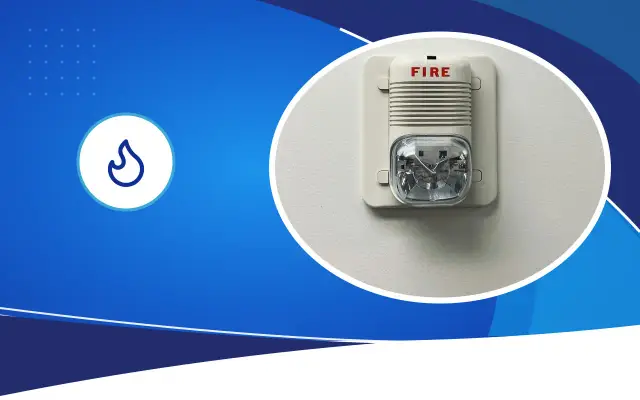
A fire alarm job has four parties, and the responsibility of each is written separately in the regulation. The building owner starts the work and is responsible for maintaining the system after handover. The project author, that is, the engineer who draws and signs the project, determines the placement of detectors, call points, sounders and the panel. The contractor puts the project into practice on site. The authority empowered to issue permits approves the project and inspects whether the work conforms to the project; in most buildings this authority is the municipality.
The regulation also separates liability. If the system turns out inadequate and the cause is an omission or error in the project, the project author is held responsible; if the cause is an omission or error in construction, the contractor is. The same company can take on both project and installation, or they can be separate parties. When they are separate, every change made on site must be reported to the project author.
When getting a quote, ask the company whether its own engineer will prepare the project or whether it will carry out a project that you bring. In both cases, the quote must list the project, materials, installation and testing as separate items. A quote that gives only a materials and labor price for a job with no project may fall short at the permit stage.
How does the process go in a new building?
In a new building, the fire detection project is part of the permit file and is prepared before construction starts. Under the regulation, a building permit is not issued if the projects do not meet fire safety requirements. If, after the building is built, the work is found not to conform to the project, the occupancy permit is not issued either until the deficiencies are fixed.
On site, the most efficient time is before the plaster and suspended ceiling are closed. Conduit and cable are laid at this stage, and detectors and call points are installed after the finishing work. If you try to pull cable after the ceiling is closed, labor takes longer and the route may deviate from the project.
- The architectural project and intended use are settled
- The engineer prepares the detection project
- The permit-issuing authority approves the project
- Conduit and cable are laid during the rough construction
- Devices are installed and the system is tested
- Documents are handed over, and a check is made at the occupancy stage
How does the process change in an existing building?
In an existing building, the job usually starts with a change of use: a shop becomes a cafe, a warehouse a workshop, a home a course center. The regulation states that the same principles apply to structures whose intended use is changed through project renovation. The engineer again determines the system needed for the new use through the project.
The difficulty on site is the cable route. Because the walls are closed, the cable runs through a channel, a tray or the space above the ceiling. In historic stone buildings or hotels that cannot stop operating, a wireless system becomes an option. Work often shifts to outside working hours, which lengthens the schedule.
Expert note: If there is a change of use, before installing the system ask the permit office at which stage the file goes for approval. A system installed without approval may be removed and redone if it does not conform to the project.
When is the fire department’s opinion needed?
The regulation provides that projects are approved and inspected by the authorities empowered to issue permits; the fire department’s place in this process is not the same everywhere. Some municipalities ask for the opinion of the fire department at project approval or at the business license stage, and some do not. Practice can also differ between metropolitan provinces and district municipalities.
Describing a single, general procedure on this point would be misleading. Get the right answer for your own building in writing from the office where you applied for the permit, and share it with the project author. The answer may also affect the format of the project and how many copies are prepared.
What to watch for during installation?
In installation, the yardstick is the approved project; every change made on site must be recorded in the project. The regulation requires the fire detection system and its parts to be manufactured, designed, installed and operated in line with TS EN 54. The system’s cable lines must be monitored continuously for faults such as open circuits, short circuits and earth leakage; if the panel does not show these faults, there is a problem in the installation.
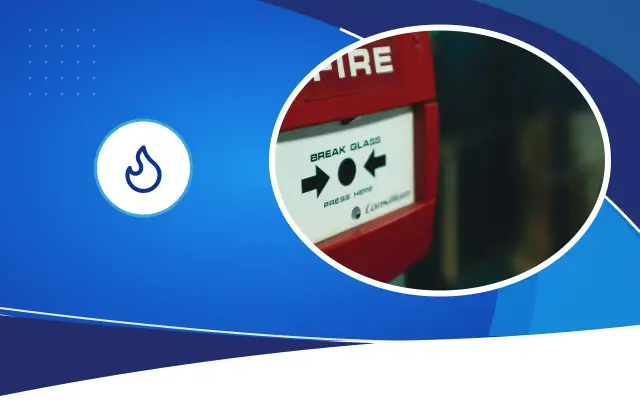
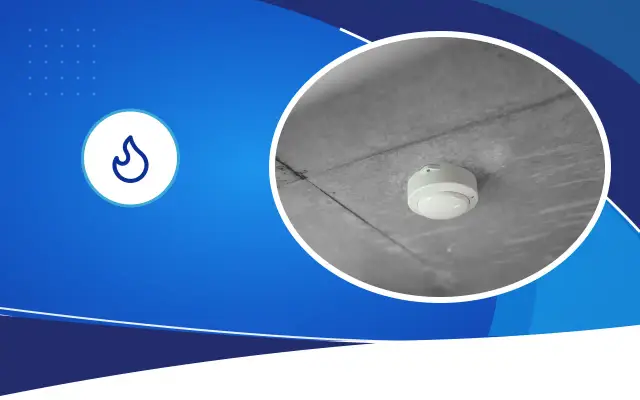
Manual call points are installed on escape routes and between 110 and 130 cm above the floor. Where a smoke detector is not suitable, the regulation requires a heat, flame or other suitable detector to be used. In Şanlıurfa and its surroundings this comes up often: roof spaces that get very hot in summer, cotton and grain stores, dusty workshops. The project determines the detector type; it is not changed arbitrarily on site.
What should you ask for at testing and handover?
Handover is done with a test in which each device is tried one by one, and it is recorded in a written report. The regulation also requires that the inspection and test provisions in the relevant standards be followed in acceptance procedures. The handover file should contain the following:
- The project updated to match the installation (as-built)
- A test report for each detector, call point and sounder
- A zone or address list, with the names shown on the panel
- Battery type, installation date and capacity information
- The panel user manual and short user training
- A periodic maintenance schedule and how to report faults
Who is responsible after handover?
After handover, the periodic inspection, testing and maintenance of the system are the responsibility of the building owner or manager. The regulation also states that this responsibility can be delegated in writing to a building official. If the system is out of service for any reason, until it works again the unprotected areas must be supervised with additional security personnel.
A building manager’s daily job is simple but must not be skipped. Fault and alarm records shown on the panel are entered in a notebook or a digital log. If a shelf, a sign or a piece of suspended ceiling ends up in front of a detector, it is fixed. If a partition wall is added inside the building or a room is turned into a storeroom, tell the engineer who prepared the project, because the new partition may need a new detector. The regulation also requires all detection devices to be accessible for periodic testing and maintenance.
In work done outside your province in the Southeast, who will do the maintenance and at what interval should be discussed before installation. If the installing company’s base is far away, a local maintenance plan or spare parts arrangement is needed. From its base in Karaköprü, Desa Bilişim carries out fire alarm projects, installation and maintenance across Southeastern Anatolia, starting with Şanlıurfa.
Frequently asked
Who prepares the fire alarm project?
The project is prepared and signed by an authorized engineer; the regulation holds the project author responsible for project errors. Which engineering profession’s signature is required depends on the regulations of the relevant authority and the professional chamber. The permit office gives this information at application.
Is fire department approval mandatory for a fire alarm project?
The regulation gives approval and inspection to the authority empowered to issue permits. Whether to ask for the fire department’s opinion varies from municipality to municipality. Get the exact answer in writing from the permit office where you apply.
Is maintenance mandatory after installation?
Yes. Under the regulation, fire detection and warning systems are put through the periodic checks, tests and maintenance required by the relevant standards, under the responsibility of the building owner or manager. This responsibility can be delegated in writing to a building official.
Resources
The fire alarm process for your building
Send us the plan or sketch, and let’s work out together which steps are needed from project to handover.