
Short answer
A smoke detector notices a fire at the earliest stage; it is for clean areas such as bedrooms, corridors, offices and classrooms. A heat detector is used where steam, smoke or dust is normal, such as kitchens, boiler rooms and parking garages. A gas detector detects a gas leak, not a fire, and is installed in areas where natural gas or LPG is used, near the ceiling or near the floor depending on the type of gas.
Smoke detector: for early warning
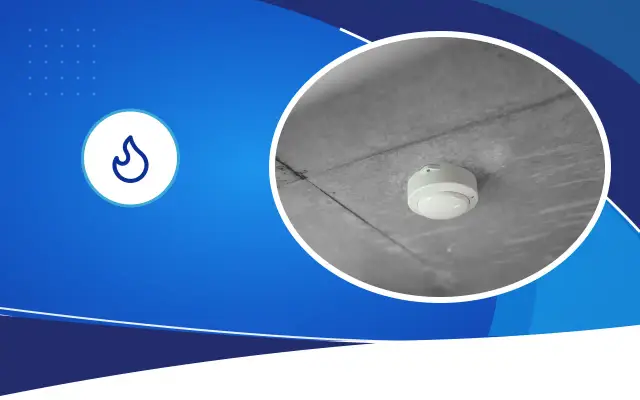
Most fires produce smoke before flames. While an armchair or a cable smolders, the room has not yet warmed up, but smoke rises. An optical smoke detector recognizes a fire when smoke particles entering its small chamber scatter light. That is why the smoke detector is the first choice in areas where people sleep or spend long periods.
A smoke detector is installed on the ceiling, at the point where smoke will collect. If it is installed in corners, right next to beams or in front of an air conditioner outlet, smoke may reach the detector late. How many detectors are needed is calculated in the design based on ceiling height, room shape and beams.
The weak point of a smoke detector is that it cannot tell real smoke apart from steam, dust or cigarette smoke. A smoke detector installed in front of a bathroom door, in a kitchen or in a dusty workshop gives frequent false alarms.
Heat detector: places where smoke is normal
A heat detector looks at the room temperature. It works in two ways. The fixed-temperature type gives an alarm when the room reaches a set temperature. In the rate-of-rise type, a rapid rise in temperature within a short time is the reason for the alarm. Many products have both features.
Since a heat detector is not affected by smoke, it is suitable for kitchens, boiler rooms, generator rooms, enclosed parking garages and dusty production areas. The trade-off is that it notices a fire later than a smoke detector. That is why it does not replace a smoke detector in areas such as bedrooms or classrooms.
In the Şanlıurfa summer, attics, sun-exposed technical rooms and sheet-metal-roofed warehouses get very hot. In these areas, if the fixed temperature value is not chosen according to the room's normal temperature, the detector may give an alarm around midday. When choosing a product, check the operating temperature range stated by the manufacturer.
Expert note: If a smoke detector will be installed in the corridor right next to the kitchen, watch whether steam reaches it when the door opens. If it does, moving the detector a little farther away or using a multi-sensor detector at that spot reduces false alarms.
Gas detector: catching a leak before a fire
A gas detector is not a fire detector. It is used to notice a natural gas or LPG leak before the gas in the room reaches an explosive concentration. Some models can be connected to close the solenoid valve on the gas line in case of a leak.
In placement, the type of gas is decisive. Natural gas is lighter than air and rises toward the ceiling; its detector is installed near the ceiling. LPG is heavier than air and settles on the floor; its detector is installed near the floor. In a restaurant kitchen running on bottled gas, a gas detector installed on the ceiling notices a leak late.
A carbon monoxide detector is a separate device. It detects this odorless, colorless gas, which forms when there is incomplete combustion in a stove, water heater or combi boiler. It should be considered separately in homes heated by stoves in winter and in apartments with an indoor combi boiler.
Which detector, area by area?
The list below is a general starting point. The final choice is made by considering the area's use and the fire design together.
- Bedroom, living room, corridor, stairs: smoke detector
- Office, classroom, meeting room, archive: smoke detector
- Kitchen, kitchenette: heat detector; if gas is used, also a gas detector
- Boiler room, generator room: heat detector and, if needed, a gas detector
- Enclosed parking garage: heat detector; carbon monoxide detection depending on the design
- Dusty workshop and warehouse: heat detector or special detection suited to the area
- High-ceiling hall and warehouse: beam-type or aspirating smoke detection
Special detectors for high ceilings and large volumes
When the ceiling is very high, smoke cools and disperses before it reaches the ceiling. A point-type smoke detector may notice a fire late in such a hall. That is why different detection methods are used in volumes such as warehouses, sports halls, exhibition areas and mosque domes.
A beam-type detector sends an invisible beam from one end of the hall to the other. It gives an alarm when smoke cuts across the beam's path. In an aspirating system, room air is continuously drawn in through small holes in pipes and analyzed in a central detector. A flame detector sees the radiation given off by an open flame and is used in areas where fuel is stored.
Which of these devices to use, at what height and how many, is determined by the manufacturer's technical data and the fire design. Instead of deciding by a general ceiling-height threshold, the area needs to be assessed on site.
When does a multi-sensor detector make sense?
Multi-sensor detectors evaluate smoke and heat information together. If there is a little smoke in the room but the temperature does not change, they can delay the alarm or adjust their sensitivity. This reduces the risk of false alarms in in-between areas such as cafeterias, hotel rooms or a crowded waiting room.
These detectors are more expensive than single-type detectors and are generally used in addressable systems. Rather than installing them in every room, it makes more sense to place them at spots where a smoke detector causes problems but a heat detector would be too slow.
Common placement mistakes
Installing the right detector in the wrong place causes as many problems as choosing the wrong detector. These mistakes are the most common in the field: installing the detector right next to a ventilation grille, leaving the detector at the old height after the suspended ceiling is changed, painters painting over the detector, and forgetting to remove the dust cover fitted during renovation.
Another mistake is not updating the number of detectors when a partition wall is added to a room. If an old open-plan office has been split in two, the new room left without a detector is only noticed at the next maintenance visit.
At Desa Bilişim, we choose detectors after seeing the area on site. If your current system has spots that give frequent false alarms, we can review the detector type and location together.
With battery-powered standalone detectors, the most common mistake is removing the battery to silence a device giving a low-battery warning and not putting it back. Replace the battery of a detector that starts beeping right away; check the manufacturing date on the device, and if it is past the lifespan recommended by the manufacturer, replace the detector. Detectors in panel-based systems also have a service life; ask your maintenance company about it.
Frequently asked
Can a smoke detector be installed in a kitchen?
No. Cooking steam and cooking smoke frequently set off a smoke detector. A heat detector is used in the kitchen; if there is gas, a gas detector is also considered.
Is a gas detector installed on the ceiling or near the floor?
It depends on the type of gas. Since natural gas is lighter than air, the detector is installed near the ceiling; since LPG is heavier than air, it is installed near the floor. Follow the manufacturer's installation instructions for the exact height.
Is a heat detector more reliable than a smoke detector?
The two are made for different jobs. A smoke detector notices a fire earlier, while a heat detector works in smoky and steamy environments without false alarms. The right approach is to choose the suitable one for each area.
Which detector for which area?
Let's walk through your building's areas together on site and decide the right detector and location for each.