

Short answer
At home, put smoke detectors in the bedrooms, in the corridor the bedrooms open onto and in the living room; put a heat detector in the kitchen. If there is a stove, combi boiler, water heater or fireplace, add a carbon monoxide detector in that area and at a point close to the bedrooms. How many are needed depends on the number of rooms and floors of the home; in multi-story homes, plan at least one smoke detector on each floor.
When is a home fire most dangerous?
If someone is at home during the day, they usually notice a fire from the smell or smoke. At night, a fire that starts while everyone is asleep can grow without waking the sleeper. Smoke spreads before flames, and a sleeping person may not notice the smell. The real job of home detectors is to wake a sleeping person in time.
Carbon monoxide is a separate danger. It forms when there is incomplete combustion in a stove, combi boiler, water heater or barbecue charcoal. It is colorless and odorless. In homes where a stove is burned in winter, people do not notice the gas given off by a stove with a blocked chimney or a poorly maintained water heater. A carbon monoxide detector measures this gas and raises the alarm before it reaches a dangerous level.
Which detector goes where, room by room?
A simple layout plan for a home can be set up as below. You can increase or reduce the number according to your home's plan.
- Every bedroom: smoke detector
- Corridor or hall the bedrooms open onto: smoke detector
- Living room and sitting room: smoke detector
- Kitchen: heat detector, not a smoke detector
- Kitchen using natural gas or bottled gas: gas detector
- Room with a stove, combi boiler, water heater or fireplace: carbon monoxide detector
- Multi-story home, top of the stairs: smoke detector on every floor
- Attic and boiler room: heat detector, depending on the space
Expert note: Do not install a smoke detector right in front of the bathroom door or right next to the kitchen door. Shower steam and cooking smoke make the detector beep often; in the end you are left with a device whose battery has been removed.
Where in the room should the detector go?
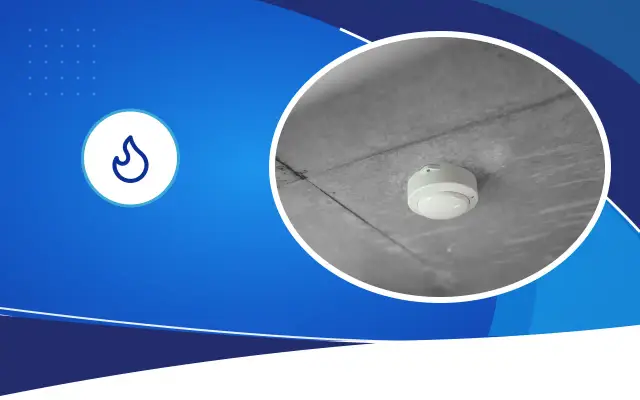
Smoke and heat rise, so smoke and heat detectors are mounted on the ceiling. A point near the middle of the ceiling is usually best. In the corner where the wall meets the ceiling, the air stays still and smoke reaches it late. Right beside an air conditioner's vent, a ceiling fan or a window is also not a good place; the air flow can carry smoke away from the detector.
The position of the carbon monoxide detector varies by model. Some manufacturers recommend mounting on the wall near the height where people breathe; others on the ceiling or on a high shelf. Follow the mounting instructions in the device's box, and place the detector not right above the stove or combi boiler but a little away from the appliance.
For a gas detector, the type of gas matters. Natural gas is lighter than air, so its detector is mounted near the ceiling. Bottled gas is heavier than air, so its detector is mounted near the floor.
- Smoke detector in every bedroom
- Smoke detector in the bedroom corridor
- Heat detector in the kitchen
- If there is gas, a gas detector at the right height
- Carbon monoxide detector near the stove and combi boiler
- At least one detector on every floor
- Regular test button check
- Replacing a detector at the end of its life
Battery, interconnected, or panel-based?
There are three options for a home. The simplest is a stand-alone battery detector. It is easy to install and needs no cable. Its weak point is that it only sounds in the room where it is. While you sleep in an upstairs bedroom, you may not hear a detector sounding in the living room downstairs.
The second option is detectors that can connect to each other wirelessly. When one of them alarms, all of them sound together. For multi-story detached houses and large apartments, this feature makes an important difference. Some models also send a notification to your phone.
The third option is a small fire panel. The detectors connect to the panel, the panel sounds a siren and, with a communication module, can notify your phone. If the home has a burglar alarm, a fire detector can also be connected to some alarm panels. This option lets you find out about a fire that starts when no one is home.
Which one you choose depends on the size of the home, the number of floors and how long you are away from home. In a small single-floor apartment, battery detectors may be enough; in a multi-story detached house, interconnected detectors or a panel-based system gives more confidence.
Situations specific to homes in Şanlıurfa
In homes that use a stove or coal heater in winter, the carbon monoxide detector is the top-priority device. The stove chimney should be cleaned before every winter, and in windy weather the chimney draft should be watched. Burning a barbecue or coal heater in a closed room is a serious risk.
In detached houses with gardens, the sections used as a pantry, storeroom or depot are often forgotten. The electrical installation there is old and the materials are flammable. A heat or smoke detector and an alarm that can be heard in the main house also cover these sections that nobody visits.
For families whose home stays empty for long periods in summer, a system that sends a notification to the phone is useful. You can learn about a fire that starts in an empty house before the neighbor does.
Points to watch in an apartment
In an apartment, do not think of the detector only for your own flat. The stairwell is the path along which smoke travels between floors. If there is no fire detection system in the building's common areas, talking to the management about it is to the benefit of all residents.
Inside your flat, a smoke detector in the hall near the entrance door lets you notice early both a fire that starts in the hall and smoke coming in under the door. Decide the position of the carbon monoxide detector depending on whether the combi boiler is on the balcony or in the kitchen.
If you are a tenant, battery detectors can be installed without drilling the wall, with screws or adhesive mounting. You can take them with you when you move.
Maintenance: battery, test and lifespan
Press the test button on the detector at regular intervals to check that it works. When the battery weakens, the device chirps briefly; when you hear this sound, replace the battery right away. Taking out the battery and leaving it out is the same as removing the detector.
Detectors also have a lifespan. The production date and the manufacturer's recommended service life are written on the device or its box. When this period is over, replace the detector with a new one. If dust or cobwebs build up on a detector, you can clean it with a dry brush or the tip of a vacuum cleaner.
When buying, look for a certificate of conformity to standards that apply to household smoke alarms such as TS EN 14604, and for conformity to the relevant standard for carbon monoxide detectors. Products without certificates and very cheap ones may not work when needed.
At Desa Bilişim, we install solutions for homes that work together with panel-based fire detection and alarm systems. We can work out together how many detectors are needed according to your home's plan.
Frequently asked
How many smoke detectors does a home need?
It depends on the number of rooms and floors. One smoke detector each for every bedroom, the corridor the bedrooms open onto and the living room is a good start. In multi-story homes, there should be at least one detector on every floor.
Where is a carbon monoxide detector installed?
Install it in the room with the stove, combi boiler, water heater or fireplace, and at a point close to the bedrooms. Since the mounting height varies by model, follow the device's instructions. Do not place the detector right above the burning appliance; put it a little away from it.
Does a smoke detector also detect carbon monoxide?
No. A smoke detector reacts to fire smoke, while a carbon monoxide detector reacts to the gas produced by incomplete combustion. There are also combined models that put both functions in one housing; when buying, make sure it detects both.
A detector plan that suits your home
Share the number of rooms and floors in your home, and let us work out together how many detectors are needed and which system is suitable.