Short answer
Lightning and sudden voltage surges on the grid reach cameras and network devices both through the power line and through the data cable. The foundation of protection is proper grounding; on top of that, surge protectors are added at the electrical panel and at device inputs, and data line protectors on network cables coming from outdoors. Using fiber optic cable between buildings and poles noticeably reduces the risk.
Where does the damage come from?
For a camera to burn out from lightning, the lightning does not have to strike the camera directly. Lightning that hits a nearby pole, tree, or power line creates short but very high voltages in the surrounding cables. This voltage travels along the cable and burns out the first sensitive device it meets, usually the camera, the switch port, or the recorder's input.
Lightning is not the only source. Switching operations on the grid, large motors starting and stopping, and power returning after an outage also cause sudden voltage surges. Even if these do not burn anything out in one go, they shorten the life of devices over time.
Tracing the damage is sometimes difficult. If, after a storm, several cameras and several ports on the same switch stop working together, the surge most likely came through the data cable.
Which installations are at risk?
The installations most at risk are pole cameras in open land, network cables running long distances outside buildings, equipment on roofs, and networks that connect distant buildings with copper cable. On flat, open ground like the Harran Plain, a single pole rising up can be the highest point around.
In places with more than one building, such as housing estates, factories, schools, and agricultural facilities, copper network cable between buildings connects different grounding points to each other. During a lightning strike, the voltage difference between these points flows through the cable and affects the devices at both ends.
- Pole cameras in open areas
- Long network cables coming from outside the building
- Networks built with copper cable between buildings
- Antennas, wireless bridges, and solar systems on the roof
- Older buildings with weak or no grounding
The foundation: grounding and equipotential bonding
Surge protectors work by diverting excess energy to the ground. If the grounding is weak or missing, even the most expensive protector cannot do its job. That is why the first step is to measure the building's grounding and improve it if necessary. Grounding measurement and installation should be done by a qualified electrician or engineer.
Equipotential bonding means connecting the metal structures, cabinets, and grounding points in the building to each other. The aim is to prevent a dangerous voltage difference from forming between different points during a lightning strike. Camera poles, outdoor cabinets, and server room racks should be included in this bonding.
Expert note: Before starting a new camera or network project, ask for the building's grounding measurement report. If there is no report, or it is old, have a measurement done before buying protectors.
- Measured and adequate grounding
- Surge protector in the panel
- Data line protector on outdoor lines
- Fiber connection between buildings
- UPS at the device input
- Checking the indicators after a storm
Where are surge protectors installed?
Protection is thought of in layers. A surge protector (surge arrester) installed in the electrical panel absorbs the large surges coming from the grid. A second-stage protector in the server room or cabinet panel limits the remaining surges. The last layer is the protective power strip or UPS right at the device input.
Data lines must be protected separately. Having every network cable that comes from outside the building pass through a data line protector at the point where it enters the building and before it connects to the switch limits lightning being carried inside along the cable. PoE is used, the protector must be PoE compatible; otherwise the camera will not receive power.
The same logic applies to analog cameras that work over coaxial cable and to antennas on the roof. For each cable type, a suitable protector is chosen.
Why does fiber optic cable make a difference?
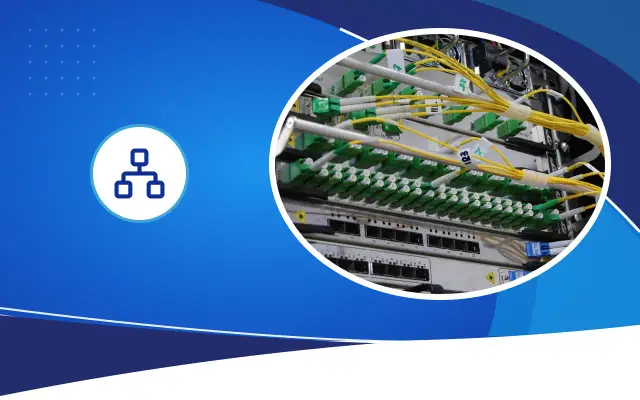
Fiber optic cable carries data with light and contains no metal conductor. That is why running fiber between buildings or to distant poles electrically separates the two ends from each other. The voltage difference that forms during a lightning strike is not carried over the fiber.
Over long distances, fiber also does not run into the distance limit of copper cable. However, if the power of the camera or switch at the far end still arrives by copper cable, that power line also needs to be protected. For armored fiber cables or cables with metal elements, grounding of those metal parts should also be included in the planning.
Is an external lightning protection system needed?
A lightning rod, or external lightning protection, protects against lightning striking the building or structure directly and carries the lightning current to the ground along a safe path. Which structure needs external lightning protection varies with the height of the structure, its use, and the risk assessment of the area. This installation must be designed by a qualified engineer in line with the relevant standards.
The team installing the cameras or network does not design the external lightning protection, but must know the existing installation. Placing a camera pole or antenna right next to the lightning conductor can create a risk of lightning jumping to the cables.
After damage, and maintenance
Surge protectors wear down a little after every major event and at some point can no longer do their job. Many models have a status indicator. After a stormy period, it is a good habit to check the indicators of the protectors in the panel and replace them if needed.
After a lightning event, it is tempting to replace the burned devices with new ones right away. First you need to understand how the damage came in: which devices were affected, were they all connected to the same cable or the same switch, did the protector in the panel trip? Without this information, a new device you install can burn out the same way in the next storm. Taking photos of the faulty devices and noting the date of the event will also help you if you need to make an insurance claim.
In network and camera infrastructure projects, Desa Bilişim treats protection of outdoor lines as part of the design. If your existing system keeps failing after storms, you can request an on-site inspection.
Frequently asked
Does a UPS protect against lightning?
A UPS limits some of the fluctuations coming through the power line and acts as the last stage of protection. However, it does not protect against surges coming through a data cable, and on its own it is not enough in a major lightning event. It should be considered together with grounding, panel protectors, and data line protectors.
Several cameras burned out at once after a storm. Why?
The most likely cause is a surge created in the cables by a lightning strike nearby. If several cameras and ports on the same switch failed together, the surge most likely came through the data cable. Replacing only the devices without checking the grounding and outdoor line protection may cause the problem to happen again.
Does every network cable need a protector?
Usually not for short runs that stay inside the building. For copper cables that come from outside the building, go to a pole, or run between buildings, a data line protector is recommended. Where possible, these lines should be installed with fiber optic cable.
Let's review your outdoor lines together
If you keep having failures after storms, request an on-site inspection through the quote form.