
Short answer
A fire detection system notices a fire early, warns the people in the building and sends signals to related systems; it does not put out the fire. Extinguishing systems, for example sprinklers, gas suppression or kitchen hood suppression, act on the fire by discharging water or extinguishing agent onto it. In most buildings the two work together: the detection system raises the alarm, the extinguishing system suppresses the fire and reports its status to the alarm panel.
What does the detection system do?
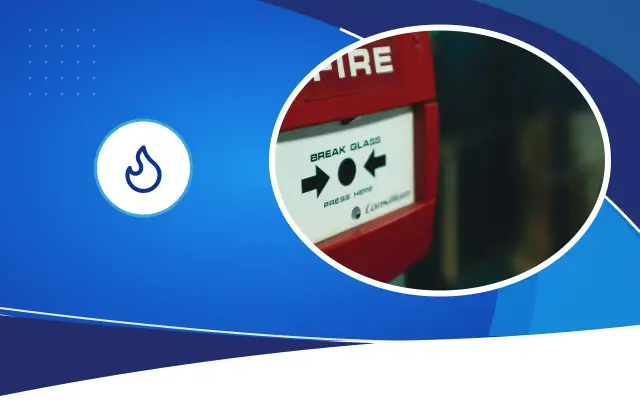
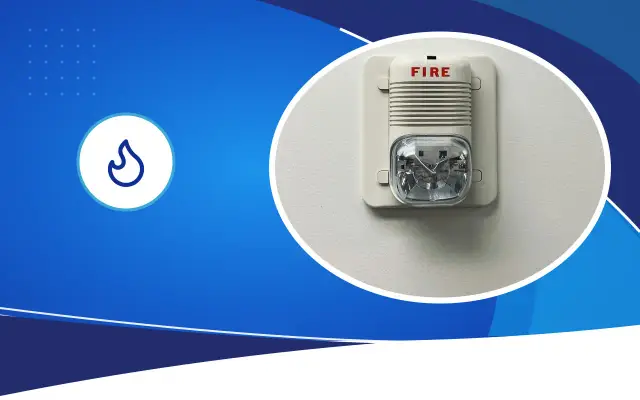
A fire detection and alarm system notices a fire with smoke, heat or flame detectors and manual call points. The panel shows in which zone or at which detector the fire was detected, and runs the sounders and strobes. If the connections have been made, it stops ventilation fans, releases fire doors, sends elevators to a designated floor and has the PA system play an evacuation message.
The purpose of this system is to buy time. An early warning lets people leave the building before the smoke thickens. In a business that is empty at night, passing the alarm to a monitoring center or to the phones of authorized people lets the fire be noticed before it grows.
However, an alarm system does not act on the fire. For a fire that starts at night in a warehouse, the panel detects it and the siren sounds, but the fire keeps growing until a team arrives. Action is taken either by people or by an extinguishing system.
How does a sprinkler system work?
A sprinkler system consists of heads placed on the ceiling and connected to the water supply by pipes. Inside each head there is a glass bulb that bursts with heat or a part that melts. When the heat of the fire raises the temperature at the head to a set value, only that head opens and sprays water onto the fire. All heads opening at once, as in the movies, does not happen in a standard sprinkler system.
A sprinkler system works on its own; it does not wait for a command from the alarm panel to open. When water starts to flow, the flow switch in the pipe detects it and sends information to the fire alarm panel. The panel starts the alarm with this information. Switches that monitor whether valves are closed are also connected to the panel, so if someone closes the main valve, the panel gives a warning.
A sprinkler system is a separate mechanical installation that requires a pump, a water tank and a plumbing project. Its design and installation are carried out by teams competent in this field.
Gas suppression: where water cannot be used
In places such as server rooms, archives, electrical panel rooms and some museum storage rooms, water can do more damage than the fire. A gas suppression system is used in these areas. The system suppresses the fire by discharging extinguishing gas into an enclosed volume.
Gas suppression systems are directly connected to the detection system. To prevent a false discharge, the discharge usually does not start until two separate detectors or two separate zones confirm the fire. First a pre-alarm sounds, then people inside are given a delay time to leave the room. Next to the door there is a button that stops or delays the discharge and a manual discharge button.
For the gas to be effective, the room must be closed and airtight. In a room where cable penetrations have been left open and the door is kept open all the time, the gas escapes and the fire cannot be suppressed. Airtightness should be checked after every renovation in the room.
Expert note: Everyone working in a room with gas suppression must know what the warning signal means, the way out of the room and the location of the delay button. This information is given in a short training after installation, and a warning sign is hung on the door.
Kitchen hood suppression system
In restaurants and commercial kitchens, grease fires are a special risk. Throwing water on hot oil makes the fire bigger. Hood suppression systems spray an extinguishing agent suitable for grease fires from nozzles placed above stoves and fryers.
These systems work with their own detection elements and, when triggered, cut off the gas or electricity to the stoves. Reporting the system’s activation to the building’s fire alarm panel lets other people in the building know too. Using a heat detector instead of a smoke detector in the kitchen is a separate matter and belongs to the detection side. Grease that builds up in the hood and duct raises the fire risk even if there is a suppression system; so duct cleaning must also be done regularly.
How do the two work together?
How the systems are connected to each other is determined in the project. Typical connections are as follows:
- The sprinkler flow switch sends an alarm signal to the fire panel
- Valve monitoring switches report a fault or warning to the panel
- The gas suppression panel sends status information to the fire panel
- The hood system signals the fire panel when it is triggered
- The fire panel starts the evacuation announcement and ventilation control
- The fire pump’s running and fault status is monitored on the panel
Which building needs which?
Whether a detection system, an extinguishing system or both are mandatory in a building is determined by the Regulation on the Fire Protection of Buildings. The regulation sets different requirements according to the building’s intended use, height, area and the number of people in it. Exact thresholds are checked at the design stage against the current provisions of the regulation.
A risk assessment can also be made where there is no requirement. A valuable archive, a server room that cannot tolerate interruption or a warehouse that is empty at night may need protection beyond the regulation’s minimum conditions. Before making this decision, consult a fire safety expert and the fire department.
In maintenance, the two are handled separately
In maintenance of the detection system, detectors, call points, sounders and the panel are tested. Maintenance of extinguishing systems requires a separate expertise: sprinkler valves, pumps and pressure values are checked, and in gas systems the pressure and weight of the cylinders. The connections between the two systems must also be tested at every maintenance.
During maintenance, the connections are disabled in a controlled way so the extinguishing system is not triggered by accident, and put back into service when maintenance is finished. Forgetting to re-enable a disabled connection means that the extinguishing system will not work in the next fire.
Frequently asked
Does a fire alarm system put out the fire?
No. The detection system notices the fire, gives a warning and triggers connected systems. Extinguishing is done by separate systems such as sprinklers, gas suppression or hood suppression, or by human action.
When a sprinkler goes off, do all the heads open?
Not in standard sprinkler systems. Each head works with its own heat-sensitive element, and only the heads exposed to the heat of the fire open.
Sprinklers or gas suppression for a server room?
Gas suppression is often preferred for server rooms and archives where water would damage the equipment. Which system is mandatory or suitable is determined by the regulation and a risk assessment.
Let’s plan the right fire system for your building
Share your building’s intended use and plan; Desa Bilişim will inspect the detection system and its connections to other systems on site and prepare a written quote.