Short answer
In a school, the fire alarm detects smoke or heat and warns everyone with sirens and strobes; the announcement system tells students and teachers where to go; and the evacuation plan sets who does what after these two warnings. If the three are installed unaware of each other, the bell rings at the moment of the alarm, the announcement goes silent or classes head to the wrong staircase. The systems need to be planned together and tested in a drill.
Why should three systems be considered together in a school?
A school has hundreds of children at the same time. Most know the building but can panic; younger classes depend on the teacher’s guidance. A fire alarm only says that something is wrong. It does not say which door the children should leave by, which staircase not to use, or where to gather in the yard.
The announcement system fills this gap. The school principal or the teacher on duty can say over the microphone, “Do not use the west staircase, gather in the front yard.” A pre-recorded evacuation announcement can also start automatically with the alarm. The evacuation plan sets how teachers will take the class out, who will take attendance and who will help students with disabilities.
When these three parts are installed by different companies at different times, they often don’t connect to each other. While the alarm sounds, the bell system may keep playing recess music, or the announcement speakers may drown out the siren.
How are the alarm and announcements connected?
A control connection is set up between the fire panel and the announcement system. When the panel goes into alarm, it sends a signal to the announcement system. When the announcement system receives this signal, it cuts off the music and bell broadcast and plays the pre-recorded evacuation message or the warning tone.
Addressable panel allow this connection to be set up by zone as well. For example, if fire is detected only in the gym, that section and the neighboring areas are warned first, and then the evacuation announcement is made across the building. Whether such phased scenarios are suitable is decided in the project, together with the school administration.
Both systems must also work when the power goes out. The fire panel has a backup battery; it should be checked whether the announcement system is also fed by backup power so that it works in an emergency.
When the installation is finished, test this connection with a real alarm scenario: trigger a detector and listen, from inside the classrooms, to how the bell, music and announcement behave.
Expert note: In the announcement system, the emergency microphone must have the highest priority. The microphone in the principal’s office must be able to cut in without waiting for recess music or the bell schedule. Be sure to test this during installation.
Placement of detectors, call points and sirens in a school
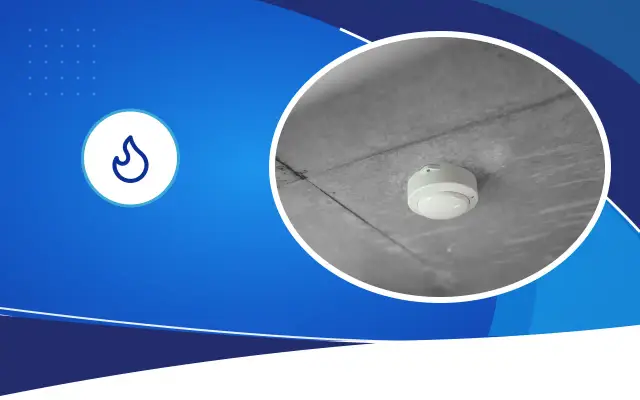
The sections of schools carry different risks. Smoke detectors are used for classrooms, corridors, the library and the teachers’ room. A heat detector is more suitable for the canteen kitchen, the boiler room and some parts of the laboratory. In high-ceiling areas such as the gym and conference hall, a beam-type detector can be considered.
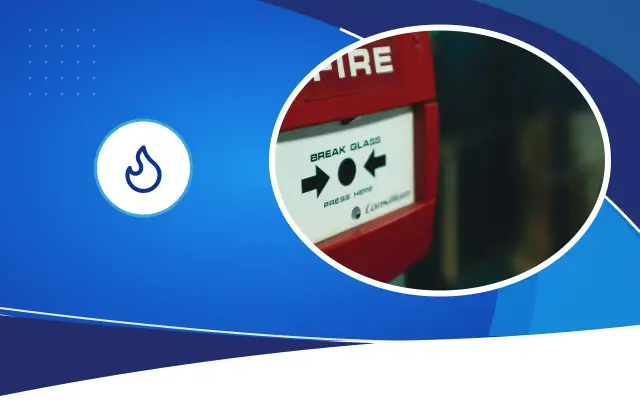
Manual call points are placed near exit doors and at the heads of stairs, where teachers can reach them easily. In schools, choosing models of call points with a cover or protection reduces false alarms that students set off as a joke.
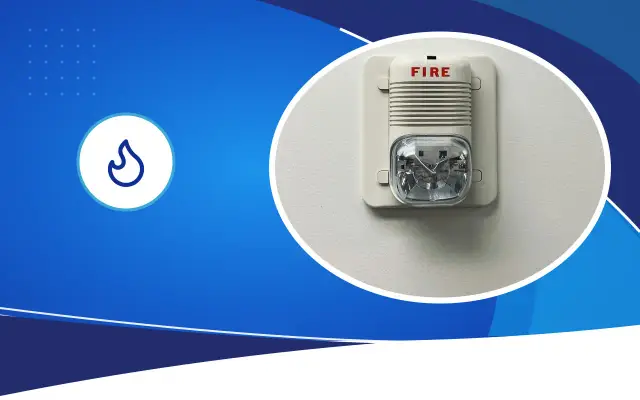
Sirens and strobes must be heard in every classroom even when the classroom doors are closed. In noisy areas such as workshops and the gym, and in schools with hearing-impaired students, strobes become even more important.
- Classroom, corridor, library: smoke detector
- Canteen kitchen, boiler room: heat detector
- Gym, conference hall: high-ceiling detection suited to the area
- Exits and stair heads: protected manual call point
- Every classroom, workshop and hall: audible siren, strobe if needed
- 1A detector or call point is triggered
- 2The panel sets off the sirens and strobes
- 3The bell and music broadcast are cut off
- 4The evacuation announcement starts
- 5Classes leave by the planned route
- 6Roll call is taken at the assembly area
Evacuation plan and drill
However well a system is installed, it is useless if students and teachers don’t know what to do. The evacuation plan shows the escape routes of each floor, the assembly area and the people in charge. This plan is posted next to classroom doors and in corridors.
The drill is the only time the alarm, announcement and evacuation are tested together. In the drill, you observe whether the siren is heard everywhere, whether the announcement is understood, which staircase the classes use and how long roll call takes at the assembly area. The frequency of drills and how they are recorded are set by the relevant regulation and the Ministry of National Education’s institutional instructions; confirm the instruction that applies to your school with the district directorate of national education.
Hold a short review meeting after the drill. If you noticed a siren that wasn’t heard, a crowded staircase or a fire exit with a locked door, write them down and fix them before the next drill.
Make a separate plan for students with disabilities. Where a wheelchair-using student with a class on an upper floor will wait, and who will accompany them, must be clear before the drill.
Common problems in schools
The situations we meet most often in the field in Şanlıurfa schools are these: panels installed years ago, with the fault light on, that nobody touches; systems where a separate panel was installed in an annex but has no connection to the main building; bell and announcement systems working unaware of the fire panel; cabinets placed in front of manual call points.
In district and village schools, another problem is tracking maintenance. When the school principal changes, the system’s maintenance history and contract can get lost. Keeping the maintenance logbook together with the school’s inventory documents solves this problem.
A smoke detector fitted in the cafeteria kitchen is also a common mistake. In a school where the alarm goes off at every lunch, after a while the teachers stop taking the siren seriously.
When installing or renewing a system
If a fire detection system is being installed or renewed in a school, the most sensible way is to handle the bell and announcement system in the same project. The cables can run through the same conduits, and the connection between the announcement system and the fire panel is planned from the start.
In large, multi-building schools, an addressable panel makes the duty teacher’s job easier because it shows which classroom the alarm is coming from. In small village schools, a conventional panel and a well-planned announcement setup may be enough. The decision is made in the project according to the size of the school and the conditions in the regulation.
If the procurement process goes through direct purchase or tender, it is important that the technical specification clearly states the integration between the fire panel and the announcement system. Otherwise the two systems are delivered separately and the connection is nobody’s job.
As Desa Bilişim, we have installed fire alarm, bell and announcement systems together in many schools in Şanlıurfa. We can see your school on site and plan how the existing systems will work together.
Frequently asked
Can the school bell system be used instead of a fire alarm?
It should not be. A fire alarm system is a separate system with detection, backup power and warning devices that meet standards. The bell and announcement system can be connected to the fire panel to support the evacuation announcement.
Students press the manual call point and set off false alarms; what can we do?
Models with a cover or protection greatly reduce this problem. Instead of moving the call point, add protection; the call point must stay where everyone can reach it. Explaining to students what the call point is for also helps.
How often should a fire drill be held at a school?
The frequency and recording of drills are set by the relevant regulation and the Ministry of National Education’s institutional instructions. Confirm the instruction that applies to your school with the district directorate of national education. In the drill, test the alarm, announcement and evacuation together.
Let’s plan alarm and announcements together at your school
Tell us the number of buildings and the existing systems at your school, and we will inspect on site and prepare a plan in which the alarm, bell and announcements work together.