Short answer
A central satellite system is an arrangement in which one or several shared dish antennas placed on the roof of the apartment building distribute satellite and terrestrial broadcasts to all apartments over a single cable infrastructure. It removes the crowd of dishes on balconies, and each apartment watches the channel it wants independently with its own satellite receiver.
Why is a crowd of dishes a problem?
Each apartment hanging its own dish on the balcony or the facade spoils the look of the building over time. Dishes screwed into the facade with anchors pierce the plaster and the insulation, shift in the wind, and cables are pushed in through the window edges. When an apartment changes hands, the old dish is often left on the facade.
Some balconies do not face the satellite. People living in these apartments either cannot watch satellite at all or have to argue with neighbors to move the dish to the roof. A central system removes this inequality too.
Every dish cable that goes up to the roof is also a separate problem. The cables are run under the roof covering, along the chimney edge or through the window sill. Over time the insulation deteriorates and rainwater seeps in along the cable. Because it is not clear whose cable is which, nobody takes responsibility.
In housing estates and newly built buildings, a ban on dishes on the facade is often written into the management plan too. In that case, a central system is a practical way for residents to watch satellite TV.
How does the system work?
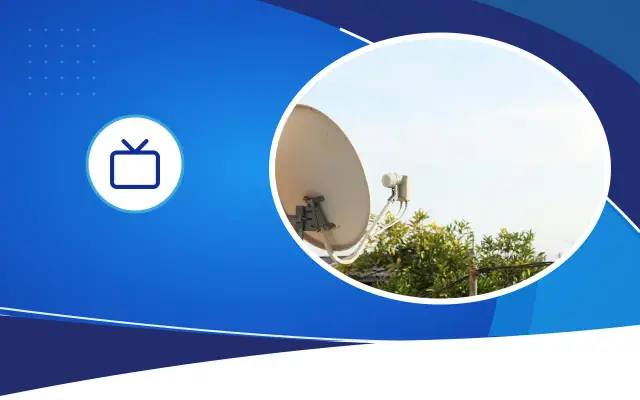
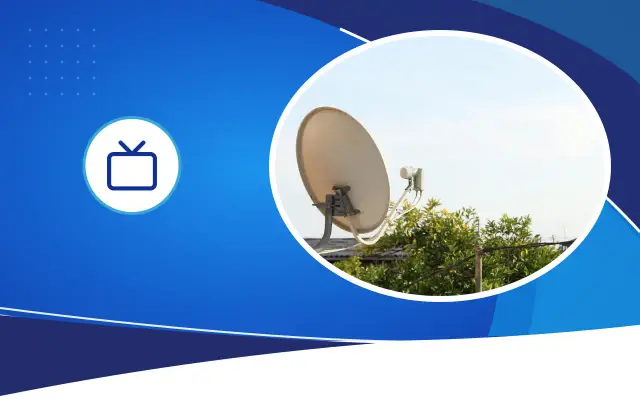
A dish antenna on the roof collects the broadcast coming from the satellite. The LNB in front of the dish makes the signal ready to travel through a cable. From there the signal goes to a distributor called a multiswitch. The multiswitch sends the cable going to each apartment the frequency band and polarization that the apartment's receiver asks for. So one apartment can watch the news while the next apartment watches a different channel.
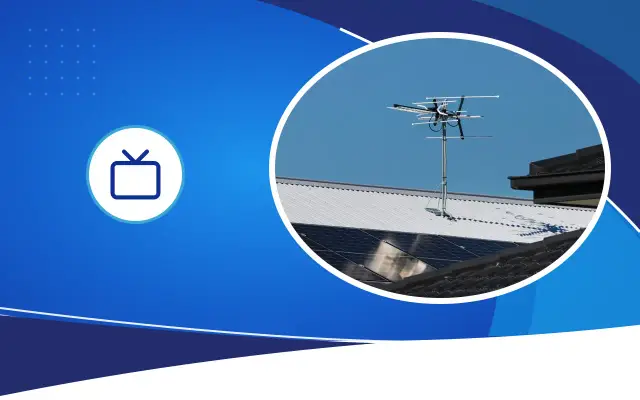
If terrestrial broadcasts are also wanted, an antenna is added to the roof and its signal is sent to the apartments through the multiswitch over the same cables. Inside the apartment, both satellite and terrestrial broadcasts can be received from a single outlet.
As the number of apartments grows, the multiswitches are connected to each other in series or distributed across the floors. This way a separate multiswitch is placed on each floor and the apartments on that floor are reached with short cables. This layout reduces signal loss in tall buildings.
In some buildings, instead of a single dish, dishes facing two different satellites or a setup with a dual LNB are requested. This depends on the channels the residents watch. Which satellite to receive from should be settled with the management before installation; adding a second satellite later may require changing the multiswitch.
Expert note: Ask from the start how many satellite receivers will be connected per apartment. If separate receivers are wanted in the living room and the bedroom, two separate lines must come from the multiswitch to that apartment.
Cabling: the most important part of the job
The quality of a central system depends largely on the cable. In older buildings, weak coaxial cables, splices added along the way and rusted connectors are the most common causes of frozen pictures.
Inside the apartment, the route the cable takes also matters. Exposed cables running along door frames or above baseboards get crushed over time. If the outlet is on the wall where the TV will stand, there is no need for extension cables.
- If possible, cables should run through the building's shared shaft or the duct in the stairwell.
- A separate line should be run to each apartment directly from the multiswitch, without splices.
- Cables outdoors should be sun-resistant and protected inside conduit.
- Connectors should be the compression type, and outdoor connections should be sealed against water.
- In the floor panels, it should be labeled which cable goes to which apartment.
Rooftop equipment in Şanlıurfa conditions
In the summer months, roof temperatures reach high levels, and dust and wind also wear the equipment down. The dish mount must be fixed to a solid base, the LNB must be suitable for outdoor use, and the multiswitch must sit in a ventilated box that does not get direct sun.
If there are solar panels on the roof, or if they are planned for the future, the location of the dish must be decided with that in mind. The panels must not block the dish's view of the satellite, and the maintenance path must stay open.
In winter, the problem is wind and rain. If the dish moves in the wind, the picture drops out from time to time. Complaints like this decrease if the mount connections and the dish direction are checked once a year.
Safe access to the roof should also be planned. The hatch or ladder used by the person going up to the roof for maintenance should be locked and under the management's control. On a roof that anyone can reach, the dish direction is easily knocked out of place.
Management decision and sharing the cost
Because a central satellite system is installed in common areas, a decision of the board of apartment owners is needed. The majority required for the decision and how the cost is shared depend on the management plan and the relevant legislation. If in doubt, it is right to consult a lawyer.
When the installation decision is made, when and how the old dishes on the facade will be removed should also be discussed. If the holes left by the removed dishes are not closed, the facade keeps taking in water.
In newly built buildings, planning the central satellite infrastructure during construction is much easier. The locations of the in-apartment outlets and the duct space in the shaft are set before the walls are closed.
Some residents may want to keep using their own dish. In that case, which rules will apply should also be discussed in the management decision. The benefit of the central system comes from removing most of the dishes.
How does the installation go?
First the roof and the shaft are inspected: where the dish will go, which route the cables will take down, and where the multiswitch will sit are determined. Then the number of apartments and the number of lines wanted per apartment are finalized.
After the cabling is finished, the signal is measured at each apartment's outlet. In a system handed over without measurement, a problem only comes to light when an apartment complains.
- Inspecting the roof and the shaft
- Determining the number of apartments and lines
- Installing the dish and multiswitch
- Pulling and labeling the cables
- Measuring the signal in every apartment
- Removing the old dishes
What to look at when getting a quote?
In quotes, it is not enough to look only at the brand of the dish and multiswitch. It should clearly state how many apartments, how many lines per apartment, the type of cable, whether terrestrial broadcast is included, and whether the old cables will be reused. The difference between two quotes often comes from these items.
You should also ask how maintenance will be done after installation. Who will reach the rooftop equipment, who will fault reports be made to, and who will keep the key to the multiswitch box? If the answers to these questions are unclear, who is responsible at the first fault becomes a matter of dispute.
In housing estates with more than one block, how the signal will be carried between the blocks is also planned separately. Desa Bilişim inspects the existing cabling on site in apartment buildings and housing estates and prepares a written quote.
Frequently asked
Will our existing satellite receiver work after switching to a central system?
Usually yes. Apartments keep using their own satellite receivers. Some older receivers may need a channel scan again after installation.
Does a fault in one apartment affect the others?
If a separate line has been run to each apartment, a cable or receiver fault in one apartment does not affect the others. But if the dish, LNB or multiswitch on the roof fails, the whole building is affected; that is why it is important to choose good-quality shared equipment.
Can the existing cables be used?
It depends on the type of cable, its age and where it runs. Sound cables with no splices can sometimes be used. It would not be right to decide without measuring on site.
Let's free your building's facade from dishes
Write the number of apartments and the current situation, and let's set a site survey day with your building management.