
Short answer
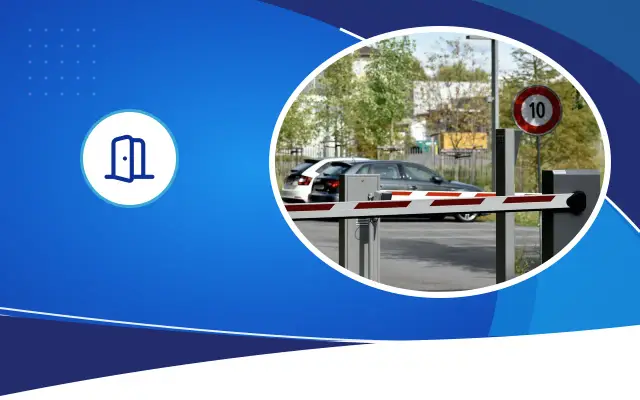
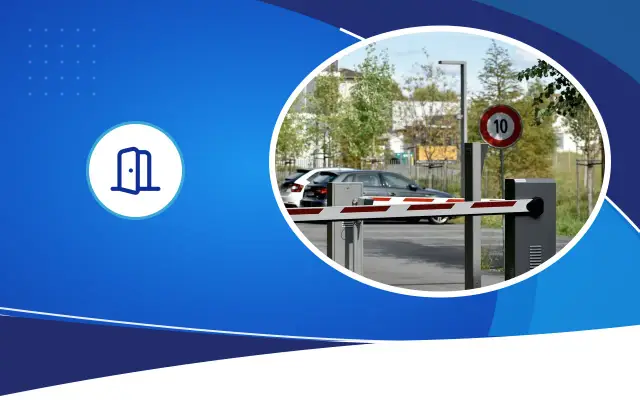
A barrier can be opened with a remote control, a card, a long-range vehicle tag, license plate recognition, a phone call or an app. In a small housing estate a remote may be enough; but remotes can be copied, are hard to cancel when lost and do not record who entered. As the number of apartments and vehicles grows, cards, tags or license plate recognition, which record who entered when and can be canceled one by one, become a more organized solution.
First, answer these questions
How the barrier opens causes more debate than the motor itself. The most discussed topics at housing estate meetings are lost remotes, departing tenants not returning their remotes, guests waiting at the gate and how delivery vehicles will get in.
Before choosing a method, clarify the following: How many vehicles are in the estate, and how busy is it in the morning and evening? Is there a security guard, and if so, at what hours? Do you want a record of who entered when? How quickly does a lost or unreturned authorization need to be canceled? How will guests, couriers and service vehicles get in?
The answers to these questions determine which of the methods below, or which two together, will be used.
Before the estate management board decides, it also helps to run a short survey of residents. How many residents use smartphones, which method older residents find easy and how many apartments have more than one vehicle directly affect the method to choose.
Remote control: simple but uncontrolled
The remote control is the best-known method. The driver presses the button when approaching the barrier, and the barrier opens. It is easy to install and use.
Its problems, however, grow as the estate grows. Fixed-code remotes are easy to copy; you cannot know who has a copied remote. Rolling-code remotes are harder to copy, but canceling a lost remote still means editing the records in the receiver one by one. Most remote systems also keep no record of who entered at what time.
Remotes make sense in small apartment buildings and estates with few apartments, where residents know each other. In large estates they usually remain a backup method.
Cards and long-range vehicle tags
In a card system, a reader post is placed in front of the barrier. The driver opens the window and holds the card near the reader. Each card’s owner is registered in the system; a lost card is canceled immediately in the software, and every passage is recorded with the time.
Opening the window to scan a card can be a hassle in rain, heat and at busy times. For this, a long-range reader and vehicle tag are used. The tag is stuck on the vehicle’s windshield, the reader recognizes the vehicle from a few meters away, and the barrier opens without the vehicle stopping. Tag types that break when someone tries to peel them off the glass make it harder to move a tag to another vehicle.
Metallized heat-control films used on some vehicle windows can make the tag harder to read. Doing a read test on a few different vehicles during installation reveals this problem early.
Expert note: Write in the estate management plan the date on which the cards and tags of residents who move out or sell are canceled. The manager canceling the authorization on the day they learn of the move closes the most common security gap.
License plate recognition: entry without carrying a card
In a license plate recognition system, a special camera placed in front of the barrier reads the vehicle’s plate and compares it with the list of registered plates. If the plate is on the list, the barrier opens. Residents do not need to carry a card or remote, and every entry is recorded with the plate and a photo.
The success of license plate recognition depends on the camera position and the light. The camera must see the plate at a straight angle at the point where the vehicle slows down or stops. Dirty, tilted or non-standard plates may not be read. So at entrances using license plate recognition, a second method, such as a card or an app, is kept as a backup.
License plate recognition also makes guest entry easier. If residents register their guest’s plate in the app for a certain time window, the guest enters without waiting at the gate.
Phone, app and PIN code
In systems with a GSM module, residents call the barrier’s number; the system recognizes the calling number and raises the barrier without answering the call. It needs no extra hardware, and adding or removing authorizations by number is easy. Its weak point is that there can be delays where the signal is weak and at busy times.
Opening by app is also becoming more common. Residents open the barrier from the app on their phone and can send a guest a time-limited access link or QR code. This method requires the barrier control unit to be connected to the internet.
A keypad with a PIN code is used more at pedestrian gates than at vehicle entrances. Because codes are easily shared, they need to be changed regularly.
For couriers bringing parcels and food orders, the most practical solution is often for residents to open the gate themselves using a video intercom or an app. The courier calls the apartment from the panel at the gate, and the resident sees the courier on their phone or on the monitor inside the apartment and opens the barrier or the pedestrian gate. This way, residents stay in control of entry even when no security guard is on duty.
How are the methods used together?
In most estates, a single method is not enough. A common setup is license plate recognition or vehicle tags for residents, cards or an app as their backup, an attendant or the app for guests, and time-restricted cards for service and delivery vehicles.
When combining methods, pay attention to the following:
- Managing all methods in a single software
- Linking each resident’s card, tag and plate to the same record
- Canceling all authorizations in one step when someone moves out
- Guest authorizations limited in time
- A button the attendant can use to open the barrier manually
- An emergency opening method for the fire department and ambulances
Security and records
Whichever method is chosen, it is recommended to place a camera next to the barrier that watches entries and exits. When the access log and camera footage are stored together, it is easy to find which vehicle entered with which authorization after an incident. Because these records are personal data, residents should be informed and only authorized people should have access to the records.
The ground loop in front of the barrier, or a photocell, prevents the barrier arm from coming down on a vehicle. However smart the opening method is, an installation without this safety equipment is incomplete. Desa Bilişim plans the barrier, the opening method and the cameras together for housing estates in Şanlıurfa; we can suggest a setup that fits your estate’s entry traffic.
Frequently asked
Do we need to replace the barrier to switch from remotes to a card system?
Usually not. A reader and an access control unit can be connected to the control board of the existing barrier motor. If the motor is very old or the control board is not suitable for external connections, replacement is considered.
Does license plate recognition work at night?
License plate recognition cameras read plates at night too, using infrared illumination. But the camera’s angle and settings must be right so that headlights do not wash out the plate. A night test should be done after installation.
Is opening by phone call secure?
The system opens only for registered numbers, so an unauthorized number cannot raise the barrier. However, if someone forgets to delete a number from the list when its owner changes, it stays authorized. The list should be updated regularly.
Let’s choose the right opening method for your estate together
Let us see your entry traffic on site and prepare a written quote for the barrier and access method.