
Short answer
In a solar irrigation system, the panels give the electricity they produce to a pump drive, and the drive runs a submersible or surface pump. The pump pushes water as long as there is sun; the water is mostly taken into a pool or a tank, so most systems do not need a battery. The number of panels and the pump power are calculated according to the well depth, the daily water need, and the irrigation method.
What parts does the system consist of?
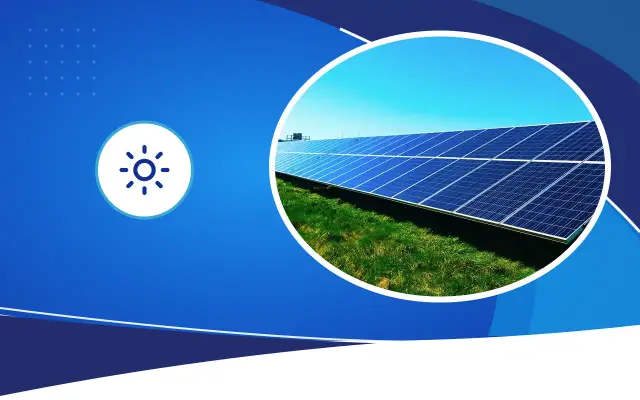
A solar irrigation system installed in a field consists basically of four parts. The panels turn sunlight into direct current electricity. The pump drive (solar pump inverter) brings this electricity into the form the pump needs, and when the sun weakens it lowers the pump speed to keep it running. The pump draws water from the well or the canal. Finally, the supporting structure, the cabling, and the protection components hold the system together.
The difference from a grid-connected pump is that the power changes during the day. In the morning and late afternoon, when the sun is weak, the pump turns slowly and pumps less water; around noon it reaches full power. The drive manages this change automatically; you do not need to press a button.
The drive also protects the pump. When the water in the well runs low, it can detect dry running and stop the pump, and it cuts the circuit on overcurrent or voltage problems. For these protections to work correctly, a level sensor needs to be installed in the well and the drive settings need to be made according to the pump's nameplate values. A drive with wrong settings can strain the pump instead of protecting it.
Is a battery needed?
In most irrigation systems, it is not. Storing water is both simpler and needs less maintenance than storing electricity. The water the pump pushes during the day is taken into a pool, a pond, or a tank standing at a height; irrigation is done from there, by gravity or with a small pressure pump.
A battery usually comes up when night irrigation is a must, when drip irrigation needs constant pressure, and when there is no place to build a tank. Adding a battery changes the scope of the system: charge control, protecting the battery from heat, and replacing it at certain intervals are taken into account. In Şanlıurfa summers, keeping the battery in a cabinet that gets sun shortens its life.
Expert note: If it is possible to build a pool or a tank, assess this option first. A water tank can sit for years without maintenance; a battery cannot.
What are the number of panels and the pump power based on?
The calculation starts with the pump, and the panels come after. The main factor that determines the pump's power is how high and how far you will carry the water. In technical terms this is called total dynamic head: the depth from the water level in the well to the surface, the friction losses in the pipe, and the pressure the irrigation system needs are added together.
After the pump is chosen, the panels are sized so that the pump can run at full power during the productive hours of the day. The panel power is kept a little above the pump's, so water is pumped in the morning and evening too. This ratio is calculated per project; for the same pump, two different fields can come out with a different number of panels.
- Well depth and the static and pumping water levels
- The amount of water the well can give
- The water needed per day and the area to be irrigated
- Irrigation method: flood, sprinkler, or drip
- The distance and the elevation difference between the pump and the pool or field
- The type and condition of the existing pump
- 1Measure the well and the water level
- 2Determine the daily water need
- 3Calculate the pump power
- 4Choose the number of panels according to the pump
- 5Plan the pool or tank
- 6Protect the site with a fence and conduit
Can the existing pump be used?
Most of the time, yes. An electric submersible pump in good condition can be connected to solar with a suitable drive. For this, the pump's nameplate information, motor power, and phase structure must be known. Connecting a pump whose nameplate cannot be read or that breaks down often to solar means carrying the problem over to the new system.
The situation is different for farmers who use a diesel motor pump. An electric pump and a drive are needed in place of the motor pump. In this switch, the well diameter is also checked, because the submersible pump has to fit in the well.
What to watch for on the Harran Plain
On the plain, wells can be deep and the water level can drop through the summer. If the pump and panel calculation is not made according to the water level in the hardest period of the season, the pump will not deliver the expected water in August. Supporting the well data with the previous year's summer measurements is a good start.
Dust is the second issue. During harvest and plowing periods, the panels get dusty quickly and production drops. The panels are installed not in the middle of the field but, if possible, away from the roadside and close to water for cleaning. The panel area is surrounded with a fence or wire mesh; if there is animal and machinery traffic in the field, the cables are run through protected conduit.
Theft should not be overlooked either. Because the panels and the drive are valuable equipment, a locked board, anchoring bolts, and a camera in suitable places can be considered.
How is maintenance done through the season?
A solar pump system needs little maintenance but is not maintenance-free. At the start of the season, the panel surfaces, the mounting bolts, the cable connections, and the drive's ventilation openings are checked. Insects, dust, or moisture that get inside the board during winter come back as a fault on the first hot day.
The most frequent job during the season is cleaning the panels. Instead of a hard brush and detergent, clean water is used with a soft cloth or sponge; instead of washing with cold water in the noon heat, early morning or late afternoon is preferred. Noting down the fault codes shown on the drive's screen helps find the problem quickly when you call for service.
If the amount of water the pump delivers has dropped noticeably at the same hours, the cause may be dusty panels, a falling well level, or a worn pump. To find out which it is, first clean the panels and watch for a day; if the result does not change, notify service.
What needs to be clarified before installation?
In systems installed for agricultural irrigation, permit and registration requirements vary depending on whether the system is connected to the grid and on current regulations. An off-grid pump system and a system that feeds energy to the grid do not go through the same process. Which documents are required is checked against the current regulation at the application stage.
The well license and the water use permit must also be valid independently of the system. A solar system does not legalize an unpermitted well. If you have your well documents ready before the site survey, the process goes more smoothly. For legal details, consult the relevant institutions and a specialist.
Frequently asked
Does a solar pump work in cloudy weather?
It works, but it turns more slowly and pumps less water. It can stop in thick cloud. That is why a tank or pool is used to cover the shortfall on cloudy days.
Does a solar irrigation system work at night?
Not without a battery. If night irrigation is needed, either water is taken into a tank during the day, or a battery and charge control equipment are added. Which is suitable is decided according to the irrigation method.
Can I connect my existing submersible pump to solar?
If it is in good condition and its nameplate information is known, it can usually be connected with a suitable drive. The decision is made by examining the pump's power, its phase structure, and the water level of the well.
Let's calculate the right system for your well together
Share your well depth and pump information; Desa Bilişim will inspect your field on site and prepare a written quote.