
Short answer
In district and village schools, the first priority is a burglar alarm that protects the building while it is empty, entrance cameras, and fire detection for the children's safety. Next come a bell and announcement system and a solid network infrastructure that reaches the classrooms. If the budget is limited, the most sensible approach is to get the infrastructure cabling right in one go and spread the devices over the years.
How is it different from a school in the center?
On paper, the needs of a school in Siverek, Viranşehir, Suruç, Birecik, or Harran are the same as those of a school in the city center. In practice, a few differences change the decisions. Village schools are often on the edge of the settlement and stay completely empty in the evenings, on weekends, and during the summer break. The school has no night watchman, and the nearest technical service is kilometers away.
Power outages and fluctuations in internet speed are also more frequent. For this reason, the system chosen for district schools needs to be simple, able to work on its own, and remotely controllable. A system that requires someone to come to the school for every fault soon becomes unusable.
The summer break is a separate period. The school stays closed for weeks, some of the teachers are out of the district, and no one stops by the building. Theft and vandalism can go unnoticed during this time. Before the break begins, checking that the alarm is armed, that the cameras are recording, and which phones the notifications go to will prevent a surprise in September.
Empty school: burglar alarm and cameras
The things most likely to be stolen in a school building are computers, smart board parts, projectors, and sometimes cables or roofing material. A camera recording shows the incident afterward. A burglar alarm, on the other hand, sounds the siren the moment a door or window is opened and notifies the responsible people's phones.
In a small school, it is a good start for the alarm panel to protect the entrance doors, the ground-floor windows, and the computer lab. The alarm should send a notification to the phone of the principal, the vice principal, or the caretaker, and arming and disarming should be easy for whoever is responsible for it.
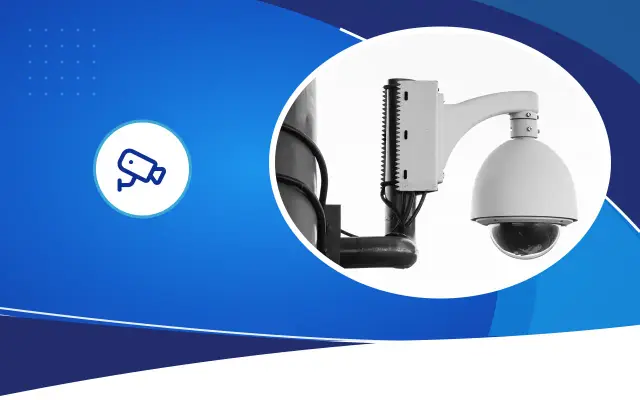
The camera priorities are the school entrance, the garden gate, the entrance doors of the school building, and the door of the computer lab. Cameras are not placed in toilets, changing areas, or students' private areas. A camera inside a classroom is a sensitive subject that requires a separate evaluation.
Expert note: Do not make arming the alarm depend on a single person. Decide who the first and second person will be to arm the alarm when the school closes; make sure this list is up to date during holiday periods.
Fire detection and evacuation
Fire safety in schools is evaluated under the Regulation on the Fire Protection of Buildings. In which school and to what extent a fire detection and warning system is mandatory depends on the size of the building, the number of floors, and its use; this is checked at the design stage.
Even in small schools below the mandatory threshold, it makes sense to have smoke or heat detectors at risky points such as the boiler room, the kitchen, the electrical panel, and the storage room. The risk is higher in older buildings heated by stoves. The detector batteries and the panel should be tested at least once a year, and during an evacuation drill you should check that the alarm sound is heard from all classrooms.
- Burglar alarm sensors on the entrance doors
- Cameras at the garden and building entrance
- Extra protection in the computer lab
- Detectors in the boiler room and kitchen
- UPS for the recorder and modem
- A network outlet in every classroom
- Camera warning signs posted
- People who will arm the alarm are assigned
Bell, announcements, and network infrastructure
A properly working school bell and announcement system directly affects daily life. A programmable bell system rings the lesson times automatically, while the announcement system reaches the whole building for evacuation and notices. Planning the fire alarm and the announcement system to work together ensures the message is heard clearly in an emergency.
Smart boards and teacher computers need a network cable that reaches every classroom and enough wireless access points in the corridors. In village schools the internet line may be single and slow. In this case it is important to set the network devices up correctly and to have the recorder work on a separate network so that the camera footage does not clog the internet line.
- Run at least one network outlet to every classroom.
- Put the network cabinet in a locked, ventilated room.
- Separate the camera system from the student network.
- Check the bell times after a power outage.
- Test that the announcement speakers can also be heard from the garden.
Power outages and remote access
Short power outages are common in district and village schools. Alarm panels run on their own backup battery, but the recorder, the modem, and switch need a separate uninterruptible power supply. Otherwise, when the power goes out, camera recording stops too, and the alarm cannot send a notification to the phone because there is no internet.
Remote access is a great convenience where service is far away. If the status of the camera and alarm system can be checked over the internet by the technical support team, small configuration problems are solved without anyone going to the school. For this, the school's internet connection and modem settings must be suitable for remote access.
Student data and camera recordings
The footage from school cameras is the personal data of students and staff and falls under the Personal Data Protection Law No. 6698. Signs stating that recording is in progress, limiting access to the recordings to authorized people only, and deleting the recordings after a certain period are basic practices.
The Ministry of National Education's regulations and instructions for schools are also decisive on this subject. Before deciding on camera placement and the recording retention period, we recommend getting the current guidance of the district national education directorate and, when necessary, consulting a legal expert.
In what order should you proceed with a limited budget?
School budgets are usually not enough to install the whole system at once. In such cases, the right approach is to do the cabling and conduit run in one go, with the devices to be added later in mind. The walls are opened once, and the devices are installed as the budget comes in.
The order of priority varies with the school's situation, but generally it is the burglar alarm and entrance cameras, then fire detection at risky points, then the bell and announcement system and network infrastructure. If you would like to prioritize based on your school's floor plan, you can contact Desa Bilişim.
Frequently asked
Is internet required to install cameras in a village school?
Internet is not needed for recording; the cameras record to the recorder at the school. Internet is needed to watch the footage on a phone and to receive alarm notifications. Modems that work over a mobile line are an option for schools without wired internet.
Can cameras be installed inside classrooms at a school?
This is a sensitive subject, and because students' personal data is involved, it should be evaluated separately. Before deciding, get the current guidance of the district national education directorate and, if necessary, consult a legal expert. Cameras are never placed in toilets or changing areas.
Is a fire alarm system mandatory in a small school?
Whether it is mandatory depends on the conditions in the Regulation on the Fire Protection of Buildings, the size of the building, and its use, and it is checked during design. Even if it is not mandatory, it is recommended to have detectors at risky points such as the boiler room and the kitchen.
Let's list your school's needs together
Write the school's location and existing systems in the quote form; let's prioritize based on the floor plan.