
Short answer
A security plan in a healthcare facility balances two needs: protecting staff and medicines, and not touching patient privacy. Cameras watch entrances, the emergency waiting area, corridors, the parking lot and the medicine storeroom; no cameras are placed in examination rooms, patient rooms, toilets or changing rooms. Card access separates authorized areas such as the medicine storeroom, the archive, the server room and the operating room.
Why is security different in a healthcare facility?
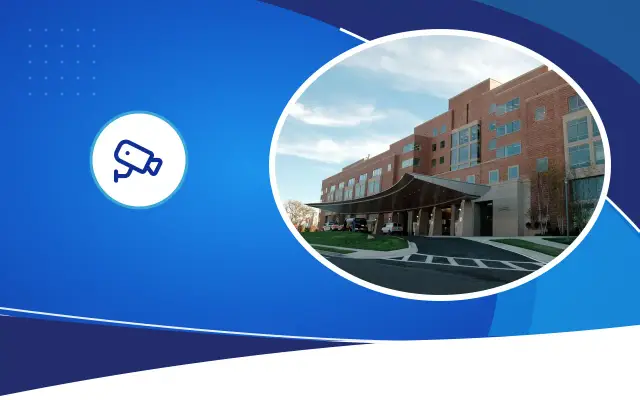
Hospitals and clinics are buildings whose doors are open to everyone. Throughout the day patients, companions, visitors and suppliers come and go. At this volume it is not possible to check at the door who goes where. That is why security is built by creating authorization zones inside the building.
The second difference is that health data is special-category personal data. If a camera records a patient during an examination, during treatment or at a sensitive moment, that recording stops being ordinary security footage. For this reason, camera placement is done by drawing privacy boundaries.
Third, in emergency departments there is a risk of verbal and physical violence against healthcare workers. Footage of the incident and the ability to call for help quickly matter for staff safety.
Where are cameras placed?
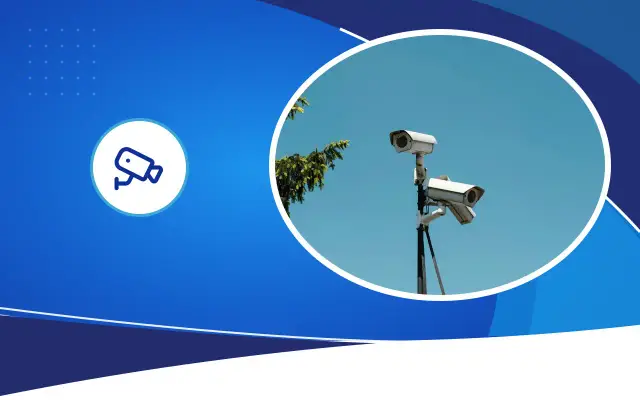
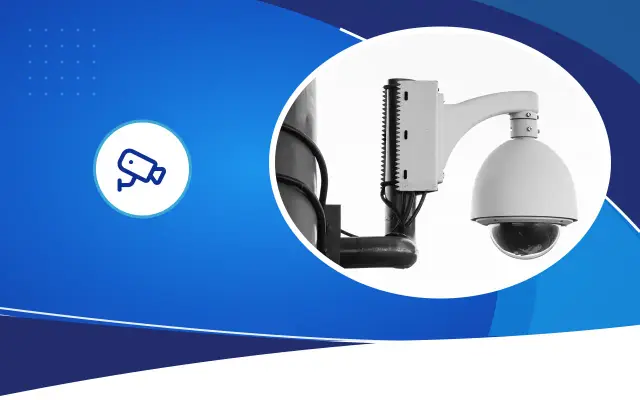
Cameras are placed in common and transit areas. The aim is to see who enters, how an incident develops and where supplies go.
- Main entrance, emergency entrance and ambulance reception area
- Emergency waiting room and in front of the triage desk
- Information, cashier and patient registration desks
- Corridors, elevator fronts and stairwells
- Medicine storeroom and pharmacy entrance
- Parking lot, building perimeter and supply door
- Doors of the archive, server room and technical spaces
Expert note: Position the camera facing the emergency waiting area so that it gives a general view from a height, and the camera facing the triage desk at an angle that sees the person in front of the staff member, not the staff member's face. The attacker's face should be in the recording during an incident.
Where are cameras not placed?
Examination rooms, patient bedrooms, treatment and dressing rooms, toilets, showers and changing areas are places where no cameras are placed. Recording in these areas can be considered a privacy violation, whatever the purpose.
In some departments such as intensive care, psychiatry or the baby unit, there are cases where cameras are used to monitor patients. This use is a medical monitoring decision different from a security camera; it is assessed separately by the management of the relevant unit, legal counsel and the data controller.
Even in common areas, the camera angle should be set so that it does not see inside an examination room through its door. On recorders, part of the image can be covered with the masking feature. Check at handover that the masked area also stays covered in the recording, not just in live view.
Authorization zones and visitor order with card access
A card access system divides the building into areas anyone can enter and areas only certain staff can enter. The medicine storeroom, especially the cabinets and rooms holding controlled medicines, the archive, the operating room, the sterilization unit, the server room and the management floor are at the top of these zones.
For each door, who can enter and at what hours is defined. A nurse's card opens the medicine room of her own ward but not another ward's. The card of cleaning staff on the night shift does not open the storeroom door. The system records every entry with the cardholder and the time; when a medicine shortage is noticed, who entered the room can be reported.
Pairing card access with cameras makes auditing easier. When the medicine storeroom door is opened, the image from the camera facing that door is stored together with the access record.
In inpatient facilities, limiting entry to ward floors outside visiting hours is wanted both for patients' rest and for security. For this, card-access doors or turnstile are installed at ward entrances. A companion is given a time-limited card at registration; the card opens only the ward where the patient is staying and certain hours. When the patient is discharged, the card is canceled.
A visitor card works on the same logic. ID details are taken at the information desk, the person is given a daily card, and the card is taken back at exit. The list of visitors who have not returned their cards can be seen in the system.
In baby and children's wards this control is kept tighter. The ward door opens only with a staff card, and entry and exit are watched by camera. Some hospitals also use systems with tags attached to babies' wristbands that sound an alarm if a baby leaves through the ward door without permission; the choice of such systems is assessed separately according to the facility's needs.
Compliance with fire and emergency exits
In healthcare facilities, locked doors must not obstruct emergency evacuation. Doors locked by card access must be released automatically in case of a fire alarm, and emergency exit routes must always be openable from the inside. Whether the lock stays open or closed when power is cut is determined by the position of the door.
These decisions are made together with the Regulation on Fire Protection of Buildings and the facility's fire project. It is important that the access control company can interface with the fire alarm system and fit the doors with locks that comply with the project. Details are checked during project design.
Staff safety: panic button and announcements
In the emergency department, at outpatient clinic desks and on night duty, a panic button can be placed under the desk so that staff can call for help. The button is connected to the panel in the security room and to the relevant camera image; when the security officer receives the alert, they also see the image of the scene.
In large facilities, being able to make calls to specific zones from the security room with a PA system is useful for directing people in a crowded incident. In small clinics, it may be enough for the panic button to send a notification to a monitoring center or the manager's phone.
For the panic button to be really usable, staff need to know where it is and not hesitate to press it. New staff should be shown the button's location and who the alert goes to during orientation, and the button should be tested a few times a year together with the security unit. A button that is never used does not come to mind at the moment of an incident.
Recording, access and KVKK
Access to camera recordings in a healthcare facility should be kept limited. Who can watch the recordings, who can export them and how long the recordings will be kept are set in writing. The recorder should be in a locked room, and every user should have their own password.
A privacy notice sign stating that cameras are in use is placed at entrances and waiting areas. For details on processing patient and employee data, we recommend working with your institution's data controller and a legal expert.
Desa Bilişim designs camera, card access and fire systems for healthcare facilities in Şanlıurfa so that they work together.
Frequently asked
Can a camera be placed in a clinic's examination room for security?
The examination room is where patient privacy is highest, and no security camera is placed there. For staff safety, a panic button and a corridor camera facing the room door can be used. For special cases, a legal expert should be consulted.
Who entered the medicine storeroom, and how is it tracked?
Card access is installed on the storeroom door and only authorized staff cards are registered. The system records every opening with the cardholder and the time. When used together with a camera facing the door, the card log and the footage confirm each other.
Are these systems necessary for a small practice too?
In a small practice the need is simpler: one or two cameras at the entrance and waiting area, a lock on the medicine or device cabinet, a burglar alarm for after hours and, if needed, a panic button at the secretary's desk are often enough.
A privacy-respecting security plan for your healthcare facility
Let's review your facility section by section and prepare a written quote for cameras and card access.