

Short answer
A construction site camera is planned differently from a system in a permanent building: on the first day of construction there is often no electricity or internet, the site changes every month, and the cameras need to be moved several times. So easily movable pole or container-top cameras are usually used, with a 4G modem and, if needed, powered by a solar panel and battery. The priorities are the material storage area, the site entrance and the area around the crane.
What does a camera protect on a construction site?
The most common losses on construction sites are rebar, cable, copper, scaffolding material and small hand tools taken from the site at night. Thieves often watch the site during the day and come at night with a pickup truck. The camera both records these incidents and, when installed correctly, alerts the night guard or you immediately.
The camera's second job is following the work on site. Even if a contractor or investor cannot go to the site every day, they can see from their phone that the concrete is being poured, the material has arrived and the crew is on site. Some companies also set the camera to take photos at regular intervals and produce a time-lapse video showing the whole construction.
The third is occupational safety. When an accident happens, footage showing how the event unfolded is important for determining responsibility. For this use, you need to inform workers and keep the recordings in line with the KVKK rules.
How is a camera powered when there is no electricity?
At the start of construction, a temporary electricity subscription or a generator usually comes to the site. When the generator shuts off at night, the camera shuts off too. If a temporary subscription is in place, the camera panel is powered from it, but you need to add a small UPS or battery backup against outages.
Where there is no electricity at all or the site is very large, a camera kit that runs on a solar panel and battery is used. The panel charges the battery during the day and the camera runs from the battery at night. The battery capacity is chosen according to the consumption of the camera and the modem and how many days without sun it must run. Since there is plenty of sun in Şanlıurfa, the panel side is usually not a problem; the thing to watch is the box that protects the battery and the modem in the summer heat.
Expert note: For a solar-powered camera, put the battery not at the top of the pole but in a locked box that stays in the shade. Batteries also attract thieves, and high temperature shortens a battery's life.
Internet: 4G modem and data allowance
Most construction sites have no fixed internet line. The cameras connect to a 4G modem, and the modem carries the video to the internet. Two things need attention here. The first is the mobile signal strength on site; for sites outside the city the signal varies a lot between operators, so it is tested on site before installation. The second is the data allowance; constant live viewing and cloud recording use it up quickly.
Keeping the recordings on a small recorder on site or on a memory card inside the camera, and using the internet only for live viewing and notifications, protects your data allowance. Remember that the recorder can also be stolen in a theft; it should be placed in a locked box or inside a container.
If there are several cameras on site, you do not need a separate 4G line for each. The cameras are gathered at one point on site through a switchor a wireless bridge, and the single modem at that point carries all of them to the internet. For long distances where the cable would exceed 100 meters, a wireless bridge or an intermediate switch is used. This setup reduces data use and the number of lines, and makes fault finding easier.
- 4G signal test done on site
- Power source and backup battery decided
- Material area is visible on camera
- Plates are visible at the entrance gate
- Recorder is in a locked box
- Night area-intrusion rule is on
- Guard's patrol route taken into account
- Camera relocation schedule set
Where do the cameras go?
Because the site plan changes at every stage, the camera positions also need to be thought out according to the construction schedule. During foundation excavation the site is open, during the rough construction the building rises and blocks the view, and during the finishing work material is moved inside the building.
The points to prioritize at the start are these:
Review this list every month as the rough construction progresses. A rising floor can blind a camera that saw the storage area in the first days. Adding the decision to move a camera to the site manager's weekly plan shortens the blind periods.
- Site entrance gate: vehicles coming and going and their plates
- The area where rebar, cable and scaffolding material are stored
- The site container and tool storage
- Where the crane and construction machines are parked
- The long sides of the perimeter fence facing the road or empty land
Mobile pole, container top or building facade
Construction site cameras are placed in three ways. A mobile pole is a tower standing on a weighted base or trailer that can be raised a few meters. The camera, panel, battery and modem are all on the same tower, and it can be moved to another corner of the site when needed.
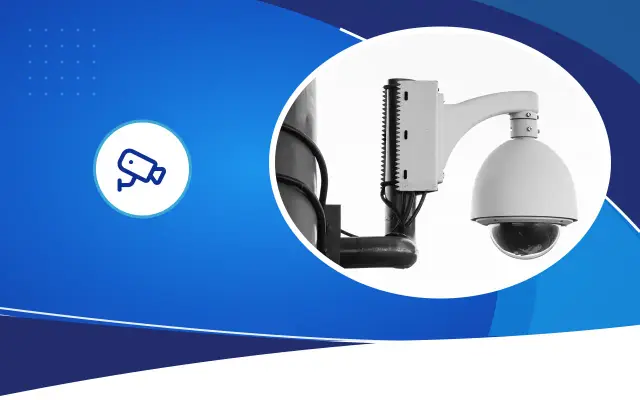
A container-top installation is simpler; the site office's electricity and internet are used, and the cameras look at the site from the container corners. As the building rises, cameras can also be moved onto the structure itself, to the upper floors of the rough construction. A speed dome camera (PTZ) looking from a height can scan the whole site, but a separate fixed camera is needed at the entrance gate for identification.
Which method is suitable depends on the size of the site, the duration of the construction and how many times the cameras will be moved. For short-term jobs, renting is also among the options.
Night alert: the notice that comes before the recording
On a construction site, a camera recording shows you what you lost after the event. To protect the material, you need to know while it is happening. For this, a night area-intrusion rule that runs after closing time is set up on cameras with smart analytics. When a person or vehicle enters the material area, the camera sounds its siren, turns on its light and sends a notification to the guard or to you.
When setting the rule, take into account the patrol route of the guard who stays on site at night. If an alert comes every time the guard passes through, the notifications are soon ignored. The guard can be given the authority to turn the alert off and on from his own phone.
Alarm sensors can also be used on site. A door contact is placed on the container door and a motion sensor in the tool storage, and they are connected to a wireless alarm panel. When the camera and the alarm work together, you can immediately check from the footage whether the alert is real.
What happens when the construction is finished?
When planning a construction site camera, it helps to think about the building's permanent camera system as well. If the building project already has camera cable routes and a server room, some cameras can be moved to the permanent system when the construction ends. The mobile tower and the solar kit go to the next site.
Desa Bilişim installs solar-powered, 4G-connected cameras for construction sites in and around Şanlıurfa, according to site conditions. We can look at your site and draw up a layout plan by stages.
Frequently asked
Do you need to run an internet line for a construction site camera?
Most of the time you do not. A 4G modem and a line with a suitable data allowance are enough. If the signal on site is weak, an external antenna can be used. On large long-term sites, if a fixed line arrives, the cameras are moved to it.
Does a solar-powered camera work all night?
It does if the battery capacity is chosen correctly for the consumption of the camera and the modem. The capacity is calculated to also cover a few days of cloudy weather. In small, cheap kits the battery may fall short, so ask for the consumption calculation when choosing.
Is it legal to monitor workers on a construction site with cameras?
Cameras can be used for security and occupational safety, but workers must be informed and a notice sign must be posted. No cameras are placed in changing or rest areas. For details, we recommend consulting a KVKK specialist.
Keep your construction site in view at night too
Let us survey your site and prepare a movable camera plan and a written quote according to the construction stages.