
Short answer
When choosing a smart door lock, first check whether it fits your door: the lock body of a steel door, the door thickness and the opening direction determine the model. Then the opening method (code, fingerprint, card, phone, face), what happens when the battery runs out, a mechanical backup key and opening with a single motion from inside in case of fire are considered. If there is Wi-Fi or a gateway, the lock can be managed remotely and the entry history shows up on your phone.
Look at your door first
The most common mistake in choosing a smart lock is buying a product without measuring the door. In most steel doors in Türkiye, the lock body is built into the door, and there is a multi-point mechanism that locks the door to the frame at several points. Some smart locks work directly with this mechanism, while others require the lock body to be replaced.
The door thickness, the dimensions of the lock body, the height of the door handle and whether the door opens to the right or left determine the lock model. Wooden interior doors, steel apartment doors, aluminum glass doors and garden gates each need different products.
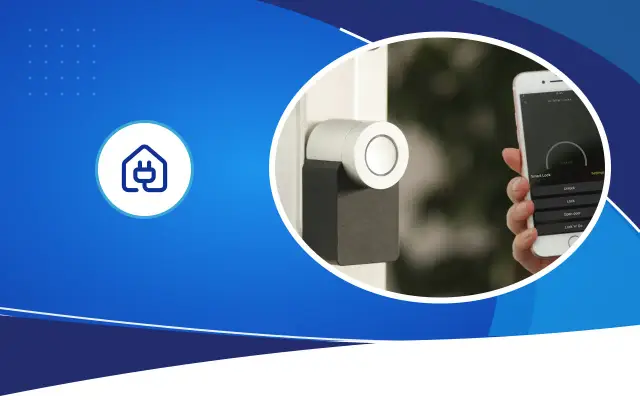
There are also smart cylinders and motorized solutions that do not require replacing the whole existing lock: they either replace only the cylinder or are mounted on the inside of the door. These solutions are better suited to tenants because they can be removed without making a permanent change to the door.
Expert note: Before buying, take a photo of the lock body on the edge of your door and measure the door thickness. Going to the seller or installer with this information keeps you from buying a lock that does not fit.
Opening methods: which one suits whom?
Most smart locks offer several opening methods together. Depending on the household's habits, one or two methods are used as the main ones and the others remain as backups.
If there is an elderly person in the household, make the method easiest for them the main one. A code screen with small buttons or a phone app can be difficult for some elderly people; a card or fingerprint is easier to use. For children, a card also reduces the risk of sharing the code with friends.
- Code: opens without carrying a key; since a code can be shared with others, it should be changed regularly.
- Fingerprint: fast and unique to each person; reading can be harder for very young children and for worn fingerprints.
- Card or tag: easy for the elderly and children; if lost, it is deleted from the lock.
- Phone app: opens at close range via Bluetooth, or remotely via Wi-Fi or a gateway.
- Face recognition: handy when your hands are full; sensitive to lighting and angle.
- Mechanical key: the last resort when the battery runs out or the electronics fail.
Will I be locked out when the battery dies?
Most smart locks run on batteries. When the battery gets low, the lock gives an audible warning, sends a notification to the app and keeps working for a while longer. If the warnings are ignored, the battery can run out completely.
In that case there are usually two ways to open the door: connecting a portable charger to an input on the outside of the lock to power it briefly, or using the mechanical backup key. Make sure the lock you choose has both options, and keep the backup key not inside the house but somewhere you trust.
Some locks come with a rechargeable battery. Before buying, find out how the lock works while charging and how long the battery lasts. Tying battery replacement to a certain month of the year, to a routine such as the clock change or holiday cleaning, makes it harder to forget.
- Lock body and door thickness measured
- Door opening direction known
- Has a mechanical backup key
- Has an external power input for when the battery dies
- Opens from inside with a single motion
- Keypad locks after failed attempts
- Time-limited guest codes can be set
- Smart home and alarm compatibility checked
Security: is an electronic lock safer?
The security of a smart lock has two parts: mechanical strength and electronic security. On the mechanical side, the lock body and the door itself are decisive; a very sturdy smart lock is not enough on its own on a weak door. If a smart cylinder is used, the cylinder must resist breaking and removal.
On the electronic side, protection against the code being found by trial and error is important. Many locks lock the keypad for a while after a few wrong attempts and send a warning to the app. A virtual code feature, which lets you add random digits before and after the real code, is also useful to keep your fingers from leaving marks on the keys when entering the code.
For app- and Wi-Fi-connected locks, check whether the manufacturer releases software updates and whether the account is protected with two-step verification. With unknown brands, this support may be weak.
Time-limited access for guests, cleaners and tenants
One of the most popular features of a smart lock is being able to give someone access without copying a key. A cleaner who comes once a week can be given a code valid only on that day, a guest a code valid during the vacation, and a repairman a single-use code.
This feature is even more important for short-term rental apartments. Each new guest gets a separate code, and the code automatically becomes invalid when the guest leaves. There is no need to go to the apartment to hand over keys.
The lock's entry history shows which code or which fingerprint was used at what time. This record can also be used to see when your child got home from school.
Fire, children and emergencies
A smart lock must always open from inside with a single motion, by turning the handle. During a fire or an earthquake, no one should have to enter a code or scan a fingerprint. Some locks have a child lock feature that restricts opening from inside; if this feature is used, you should know how it is disabled in an emergency.
With models that lock automatically when the door closes from outside, there is a risk of being locked out if you forget your key or phone. Adjust the auto-lock time and behavior to suit your own habits.
On a garden gate that gets the Şanlıurfa summer sun, the electronic lock must be suitable for outdoor use, and the screen and keypad must stay readable in the sun.
Together with your smart home and alarm
A smart lock can also be used as part of home automation. Scenes are possible such as the alarm system arming and the lights turning off when the door is locked, or the entrance lighting turning on when the door opens. For this, the lock must be compatible with the smart home system or alarm panel you use; check the compatibility list before buying.
When used together with a video intercom , you can see a visitor at the door on your phone and open the door remotely. Desa Bilişim plans smart locks, intercoms, alarms and cameras to work together in the same home, and during installation helps you choose the model that fits your door.
Frequently asked
Can a smart lock be fitted to a steel door?
It can be fitted to most steel doors, but the lock body, the door thickness and the multi-point locking mechanism must match the model. In some cases the lock body needs to be replaced. The safest way is not to buy a product before the door is measured.
Will the smart lock not open if the internet goes down?
The lock works with a code, fingerprint and card independently of the internet. The internet is only needed for remote opening, notifications and setting codes remotely. Opening from your phone at close range via Bluetooth can also work without the internet.
I'm a tenant. Can I have a smart lock fitted to my door?
Smart cylinders that are fitted without making permanent changes to the door, or motorized solutions mounted on the inside, are suitable for tenants. When you move out, they are removed and the old cylinder is put back. We recommend talking to your landlord beforehand.
Let's choose the right smart lock for your door together
We will measure your door on site, check lock, intercom and alarm compatibility, and prepare a written quote.