Short answer
If the place sits empty at night or on holiday and your main fear is someone entering through a door or window, set up an alarm first; the alarm notices the entry instantly, sounds the siren, and alerts you or a monitoring center. If the place is open during the day and you want to see afterward what happened with the cash register, staff or customers, set up cameras first. Whichever you start with, plan the cabling and device infrastructure at the first installation so that you can add the second one later.
What do an alarm and a camera each do?
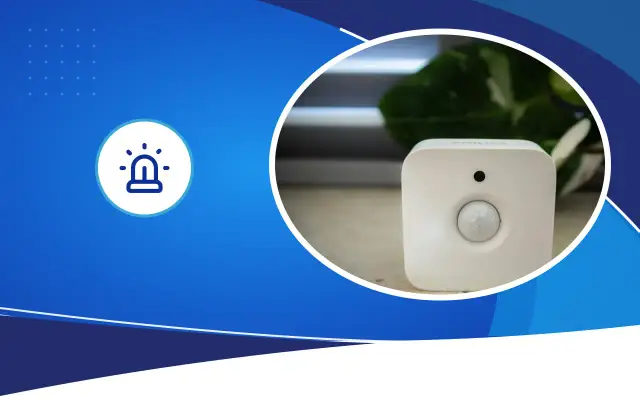
A burglar alarm is installed to notice an incident the moment it happens. When magnetic contacts on doors and windows, motion detectors inside and glass-break detectors sense an entry, the panel sounds the siren and sends a notice to your phone or to a monitoring center. The siren tells the intruder they have been noticed and warns those nearby.
A camera, on the other hand, records what happened and lets you look in remotely. The answers to who came in, at what time and what was taken are in the camera. Models with smart analytics can also send a notification when they detect a person or a vehicle; but a camera notification has to reach you and you have to look at it, and no siren sounds.
The alarm is meant to stop the incident in the moment, and the camera is meant to document it. Which one comes first is decided by when the place is empty and which incident worries you most.
Which should you start with at home?
In homes, an alarm usually makes sense first. A home is most at risk at night while you sleep or when it is empty on holiday, and at those hours nobody watches camera footage. The alarm wakes you the moment a door is opened, or notifies your phone while you are on holiday.
In detached houses with a garden, a camera facing the garden gate or the parking area completes the alarm. Camera footage helps you avoid mistaking the courier at the door for someone entering the garden. For summer houses and village homes that stay empty for long periods, alarm first and then one or two cameras for remote viewing is a good order.
Which should you start with in a shop?
In a supermarket, café or pharmacy that is open all day, the camera usually comes first. The common problems in these businesses happen during working hours: cash register discrepancies, shoplifting, disputes with customers. An alarm does not solve these; a recording that watches the register and the entrance does. In any area where you install cameras, under KVKK rules, remember to post a privacy notice sign.
If there is also a risk when the shop is closed at night, for example if the shop window faces the street or the back door opens onto an alley, the alarm comes to the fore. For businesses that hold valuable goods, such as jewelers, phone shops and pharmacies, both are considered together.
Expert note: Ask yourself this question for your shop: was the incident I experienced or feared in the last year during working hours or outside them? If during working hours, the camera comes first; if outside working hours, the alarm comes first.
What about warehouses, fields and construction sites?
In wide places that are often empty and where power or internet is limited, such as warehouses, fields and construction sites, the decision becomes more technical. In a closed warehouse, an alarm with door contacts and indoor motion detectors works well. In an open field or construction site there is no indoor detector, and outdoor detectors can be affected by wind, animals and dust.
For an irrigation point in the Harran Plain or for a construction site, a camera that distinguishes people from vehicles is often more suitable: when someone enters the site, a video notification arrives on your phone, and you look and decide. If there is no power, a solar-powered camera with a 4G connection can be considered.
At these sites, decide from the start who the notification will go to. Who will open a notification that arrives at 3 a.m., and whom will they call in a suspicious situation? If there is no answer to these questions, the camera only records the incident. Forwarding the notification to the phones of more than one person reduces the number of alerts missed at night.
How do you split the budget if it only covers one system?
Counting the coverage makes the decision easier. Imagine a shop with a front door, a back door and one display window. To cover all the entrances with an alarm, 2 magnetic contacts, 1 glass-break detector for the window, 1 motion detector inside, one panel and one siren are enough: with 4 detectors, all 3 entry points are protected.
For a meaningful recording with cameras in the same shop, you need at least 3 cameras, covering the register, the front door and the back door, and a recorder. If the number of cameras drops from 3 to 2, one of the points is left blind.
An alarm covers all the entrances with a small number of parts, while a camera needs a separate device for every point you want to see. If your budget is limited and your priority is preventing entry at night, an alarm protects more points. If your priority is recording events during the day, 2 cameras looking at the right spots do more than 4 cameras placed poorly.
What should be done from the start to add the second one later?
Thinking about the second system at the first installation makes the later work easier and keeps you from breaking into the walls a second time. Discuss the following with the company doing the installation:
- Have empty conduit or cable trays run to future camera points
- Leave empty channels on the recorder for cameras to be added later
- Choose an alarm panel that offers phone notifications and app support
- Ask whether the alarm and cameras can be monitored from the same app
- For power outages, plan a UPS for the panel battery and the recorder
- Power the internet modem so that it also keeps working during an outage
Short summary for the decision
For homes, summer houses and closed warehouses that sit empty at night and on holiday, start with an alarm; for shops and businesses that are open during the day, start with a camera; for wide fields and construction sites with limited power, starting with a camera with smart analytics is in most cases the right order. In a business that holds valuable goods, plan both together. When deciding, also look at the history of the place: a door that was broken into before, a cash register discrepancy that was complained about, or a pump stolen from a field often tells you on its own which system should come first.
Desa Bilişim installs burglar alarms and security cameras together; after an on-site inspection, we can prepare a written plan for installing the two systems in stages. You can reach us at 0 (414) 312 33 72.
Frequently asked
If I have cameras, do I need an alarm?
A camera records what happens but does not sound a siren by itself; if you do not see the notification when someone enters at night, the event just stays on the recording. If the place is empty outside working hours and there is a risk of entry, consider adding an alarm to the cameras.
I’m a tenant. Which is easier to remove and take with me?
Wireless alarm systems and a few Wi-Fi cameras are the best options for moving. In wired systems the cabling stays in place, while the devices can be removed and reinstalled in the new place.
Can the alarm and cameras be monitored from the same app?
With some brands the alarm panel and cameras appear in the same app, while others need a separate app. If you will install the two in stages, ask about this compatibility at the first installation.
Let’s decide together which to start with
Let’s look at your home or business and plan in writing which system should come first and how to add the second one.